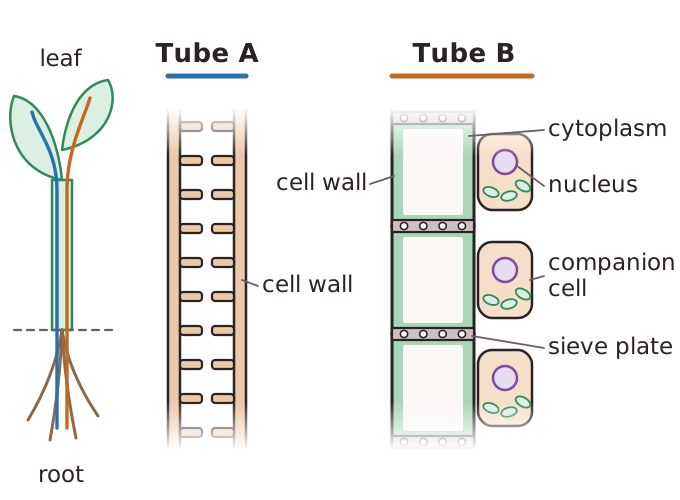
Xylem and phloem are the two transport tissues in a plant. Both run from the roots to the leaves, but their structures are adapted to different jobs.
Xylem carries water and mineral ions from the roots up to the leaves. It is made of dead cells joined end to end. The end walls have broken down and the cells have lost their cytoplasm, so they form a long hollow tube that water can flow through easily. The walls are thickened with a strong substance called lignin, often in rings or spirals. Lignin makes the walls strong so the tube does not collapse, and it also helps support the plant. Water moves in one direction only, upwards.
Phloem carries sucrose and other dissolved food around the plant. It is made of living cells. The sieve tube cells have small holes in their end walls, called sieve plates, which let the sap pass through. Next to each sieve tube is a companion cell with many mitochondria. These release the energy needed to move sucrose into the sieve tube. Phloem can carry sucrose in both directions, up and down the plant.