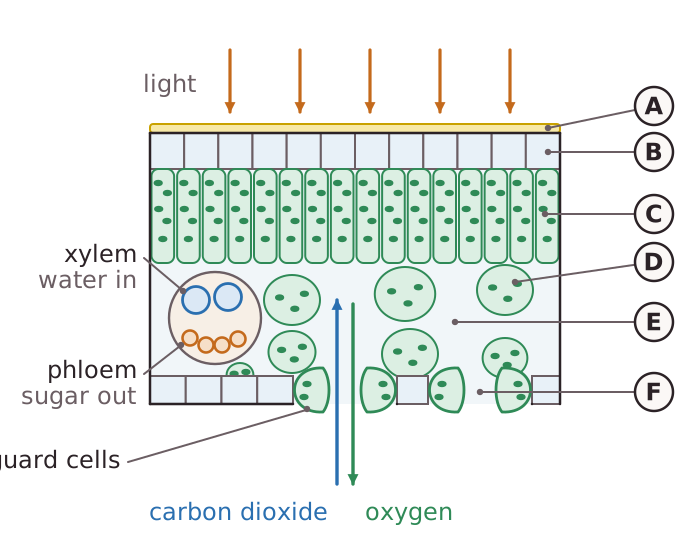
A leaf is an organ built to catch light and swap gases. It is thin and flat, so it has a large surface area for absorbing light, and carbon dioxide only has a short diffusion distance to reach the cells inside.
The top layer, the upper epidermis, is transparent so light passes straight through. It is covered by a waxy cuticle, which reduces water loss by evaporation. Below it is the palisade mesophyll: tall cells packed closely together, each holding many chloroplasts. Most photosynthesis happens here, because this layer sits where the light is strongest.
Underneath is the spongy mesophyll. Its cells are loosely arranged with large air spaces between them, so carbon dioxide can diffuse through the leaf to the photosynthesising cells, and oxygen can diffuse back out. The air spaces connect to the outside through pores called stomata, mostly in the lower epidermis, where it is cooler and less water is lost. Each stoma is opened and closed by a pair of guard cells that change shape. Open stomata let carbon dioxide in, but they also let water vapour escape.
Veins run through the leaf. Xylem brings water to the mesophyll cells for photosynthesis, and phloem carries the sucrose away to the rest of the plant.