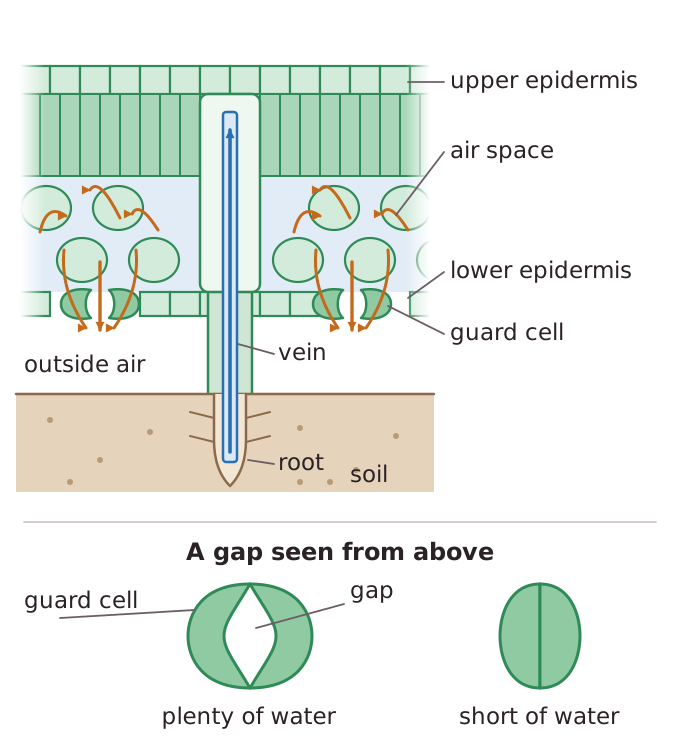
Transpiration is the loss of water vapour from the leaves of a plant. Inside a leaf, water evaporates from the surface of the mesophyll cells into the air spaces. The water vapour then diffuses out of the leaf through tiny pores called stomata, because there is a lower concentration of water vapour in the air outside.
The water lost from the leaf is replaced by water pulled up the xylem from the roots. Water molecules stick together, so the water moves up as a continuous column. This flow of water from the roots to the leaves is called the transpiration stream, and it carries dissolved mineral ions up the plant with it.
Most stomata are on the underside of the leaf. Each stoma is surrounded by two guard cells. When water is plentiful, the guard cells take in water and become turgid. They bend apart and the stoma opens, which lets carbon dioxide enter for photosynthesis. When the plant is short of water, the guard cells lose water and become flaccid. The stoma closes, which reduces the water lost by transpiration.