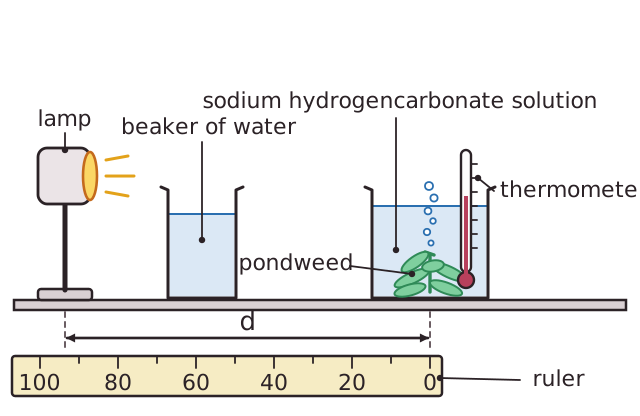
This practical uses an aquatic plant such as pondweed. Oxygen made by photosynthesis comes off the cut stem as bubbles, so the number of bubbles in a set time shows the rate of photosynthesis.
Method. Place a piece of pondweed in a beaker of water containing sodium hydrogencarbonate, which supplies carbon dioxide so that it is not a limiting factor. Put a lamp at a measured distance from the beaker. Place a beaker of water between the lamp and the pondweed to absorb heat from the lamp, so the temperature stays constant. Leave the pondweed for a few minutes to adjust to the new distance, then count the bubbles for the same time, for example one minute. Repeat the count, calculate a mean, then move the lamp to a new distance.
Variables. The independent variable is the distance of the lamp from the pondweed, which changes the light intensity. The dependent variable is the number of bubbles per minute. Control variables include temperature, the volume of water, the same piece of pondweed and the time of each count.
Result. The further the lamp is from the pondweed, the more the light intensity decreases, so fewer bubbles are made. Repeating readings makes the results more reliable. For example, counts of 10, 14 and 12 bubbles have a mean of 36 divided by 3, which is 12.