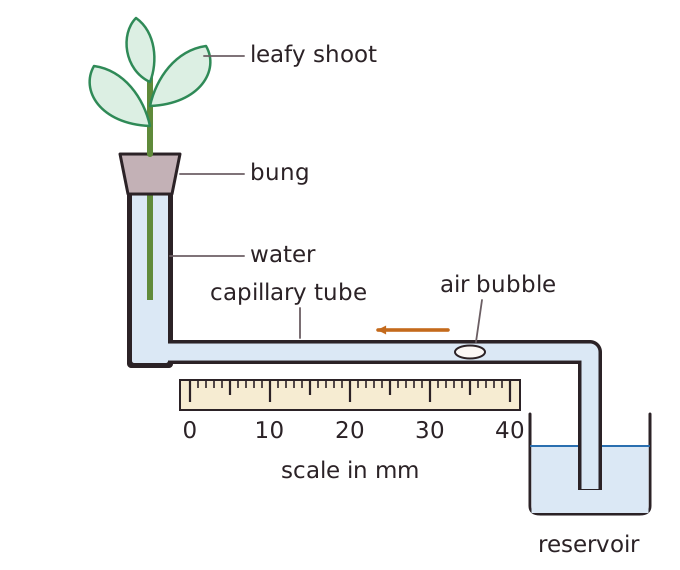
The rate of transpiration is how quickly a plant loses water. In a school experiment it is estimated with a potometer. A cut shoot takes up water from a tube, and an air bubble moves along a thin capillary tube as the water is used. Almost all the water a plant takes up is lost by transpiration, so the uptake is a good estimate of the rate.
The calculation is: rate = volume of water taken up ÷ time. Volume is measured in cm³ and time in minutes, so the rate is in cm³ per minute. For example, a shoot takes up 3.0 cm³ of water in 15 minutes. The rate is 3.0 ÷ 15 = 0.2 cm³ per minute. If you repeat the experiment, add the rates and divide by the number of repeats to find a mean.
You may also need a percentage change. Suppose the shoot is put in a draught and takes up 4.5 cm³ in 15 minutes. The rate is now 0.3 cm³ per minute. The change is 0.3 − 0.2 = 0.1. The percentage change is change ÷ original × 100, so 0.1 ÷ 0.2 × 100 = 50. The rate has increased by 50 per cent.