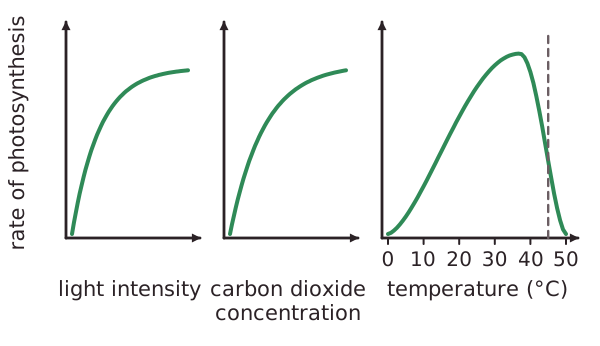
A limiting factor is the factor in shortest supply, which stops the rate of photosynthesis from going any higher. Three factors matter: light intensity, carbon dioxide concentration and temperature.
Light intensity. Chlorophyll absorbs light energy, so when light is dim the rate is low. As light intensity rises, the rate increases because more light energy is absorbed. Eventually the graph levels off, because another factor is now limiting.
Carbon dioxide concentration. Carbon dioxide is a reactant, so a low concentration limits the rate. Raising it increases the rate until the graph levels off.
Temperature. A higher temperature gives the molecules more kinetic energy, so the rate rises. The rate is highest at the optimum temperature. Above about 45 °C the enzymes that control photosynthesis begin to denature, and the rate falls quickly.