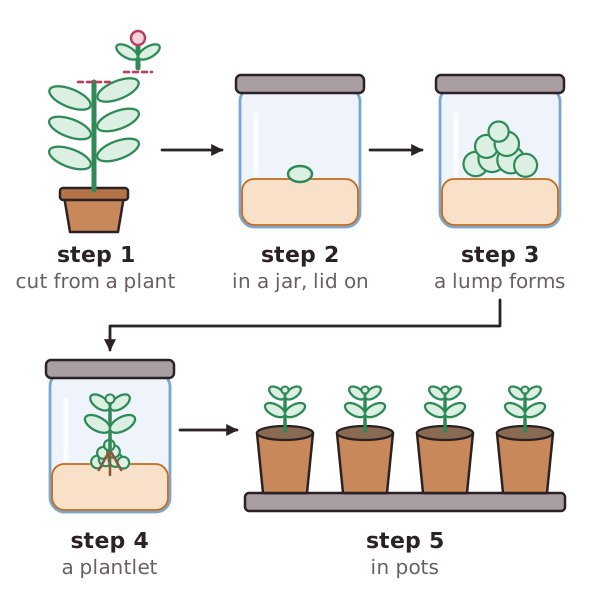
Tissue culture is a way of growing new cells or whole plants from a very small piece of living tissue. A few cells are taken from the parent and placed on a sterile nutrient medium that contains nutrients, plus hormones that make the cells divide. Everything must be sterile, because bacteria and fungi grow faster than plant cells and would take over the dish.
In plants, the small piece of tissue (often from a shoot tip) is placed on the medium. The cells divide to form a mass of cells, and when the right hormones are added the mass grows roots and shoots and becomes a tiny plantlet. Each plantlet is a clone of the parent, so it has identical genes. The plantlets can then be moved into compost to grow on.
In plant breeding programmes, tissue culture lets growers produce thousands of identical plants quickly, in a small space, at any time of year. It can be used to copy rare plants that are hard to grow from seed, and to produce large numbers of a plant with a useful feature, such as disease resistance. In medical research, cultured animal cells can be grown in dishes and used to test new drugs, and to study how cells behave, without using whole animals.