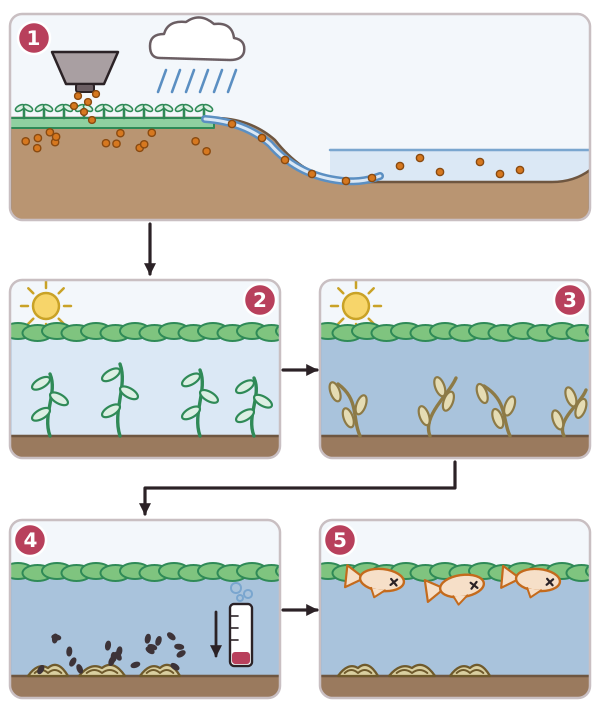
The human population keeps growing, so farmers must produce more food from the same amount of land. Two ways to raise crop yield are fertilisers and biological control. Each has advantages and disadvantages, and you need to weigh them up.
Fertilisers add mineral ions such as nitrate, phosphate and potassium to the soil. Plants take these in through their roots. Nitrate is used to make protein, so plants with enough nitrate grow faster and give a bigger yield. The disadvantages are cost and pollution. When rain washes fertiliser into rivers and lakes, algae grow very quickly and block light from reaching the plants below. The plants die, and bacteria that decompose them use up the oxygen in the water. This is called eutrophication, and fish and other water animals die.
Biological control means using a living organism to reduce the number of pests, instead of spraying chemicals. The organism may be a predator, such as a ladybird that eats aphids, or a parasite or a disease-causing microorganism. The advantages are that there are no chemical residues on the crop, harmless species are not killed, and pests are less likely to become resistant. The disadvantages are that it is slow to work, it never removes the pest completely, and the control organism may spread, feed on other species or become a pest itself. Predator numbers also fall when their food supply, the pest, runs out.
Chemical pesticides work faster, so biological control is slower, but pesticides they can kill harmless insects, build up in food chains and lead to resistant pests.