Selective breeding is when humans choose parents with desired characteristics and breed them together. The best offspring are chosen to breed, and this is repeated over many generations. In food plants it has produced crops with higher yield, larger fruit and disease resistance. In domesticated animals it has produced cattle with more milk or meat and sheep with more wool. This increases food production.
There are drawbacks. Selective breeding reduces the genetic variation in a population, so a new disease could wipe out many individuals. Closely related animals are bred together, which can cause inbreeding and inherited disorders.
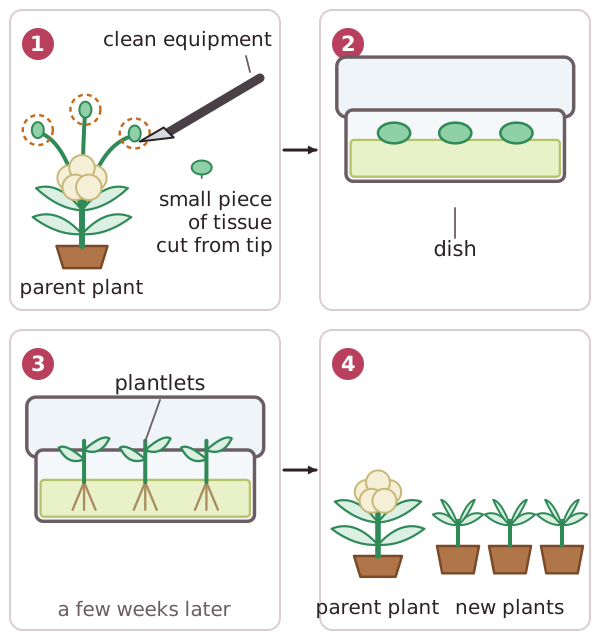
Tissue culture grows new plants from small pieces of tissue placed on nutrient agar in sterile conditions. The plants are genetically identical to the parent, so many copies of a plant with desired characteristics can be made quickly. It can also save rare plants. In medical research, animal and human cells can be grown by tissue culture to test new drugs and to study diseases.