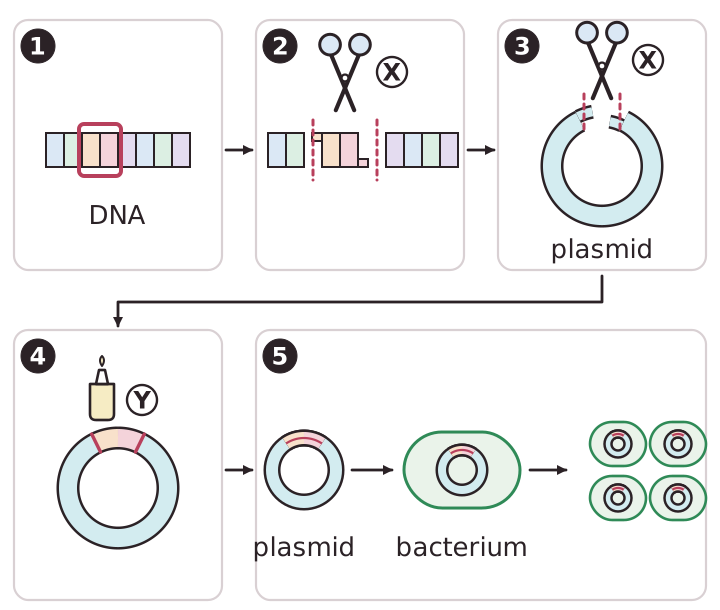
Genetic engineering follows a series of stages. First the gene for the desired characteristic is identified. It is then cut out of the DNA using a restriction enzyme. Each restriction enzyme cuts DNA at a specific base sequence, and many cut in a staggered way that leaves short single-stranded ends called sticky ends.
The gene must be carried into the host cell by a vector. A vector is usually a plasmid, which is a small ring of bacterial DNA, or a virus. The same restriction enzyme is used to cut open the plasmid, so the plasmid has sticky ends that are complementary to those on the gene. The sticky ends pair up, and the enzyme DNA ligase joins the gene into the plasmid, sealing the gaps in the DNA. The vector is then put into a host cell such as a bacterium. The host cells divide, every new cell has a copy of the gene, and they make the protein.
Crop plants can also be modified. The bacterium Bacillus thuringiensis makes a protein that kills insects. When the Bt gene is put into crops such as maize and cotton, the plants make the protein and insects that feed on them die. Advantages are a higher yield and less insecticide sprayed, which saves money and harms fewer other organisms.
There are disadvantages. The protein may harm insects that are not pests, insects can evolve resistance to it, GM seed is expensive for farmers, and some people worry that the new gene could spread to wild plants or have long-term effects that are not yet known.