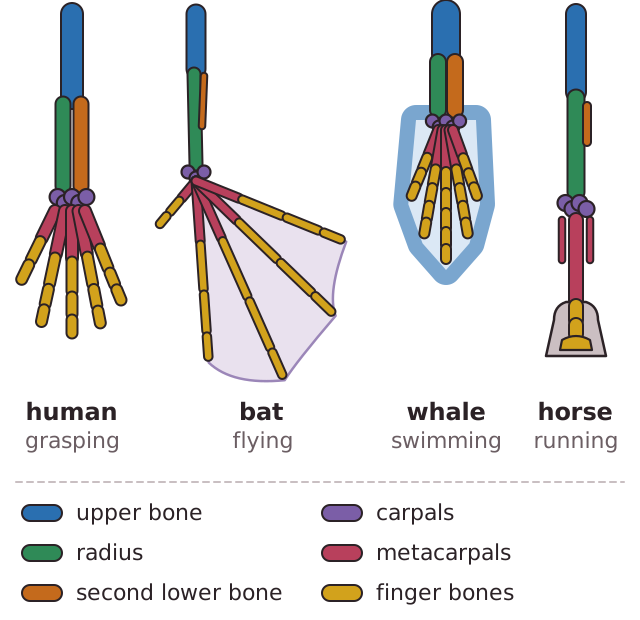
Many vertebrates have a limb with a basic plan of five digits. This is called a pentadactyl limb, from the Greek for five fingers. The human arm, the bat wing, the whale flipper and the horse leg look very different and do very different jobs: grasping, flying, swimming and running.
Yet the bones inside them follow the same pattern. There is one upper bone, the humerus, then two lower bones, the radius and the ulna. Next come small wrist bones called carpals, then the metacarpals of the hand, and finally the finger bones, called phalanges. In a bat the finger bones are very long and support the wing. In a whale they are short and enclosed in a paddle. In a horse the limb has been reduced to one main toe, although its ancestors had several toes.
Structures with the same basic bone pattern but different functions are called homologous structures. If each animal had come from a separate origin, there would be no reason for the same pattern to appear every time. The best explanation is that these animals share a common ancestor that had a pentadactyl limb. Over many generations, natural selection changed the limb in each group to suit its way of life.