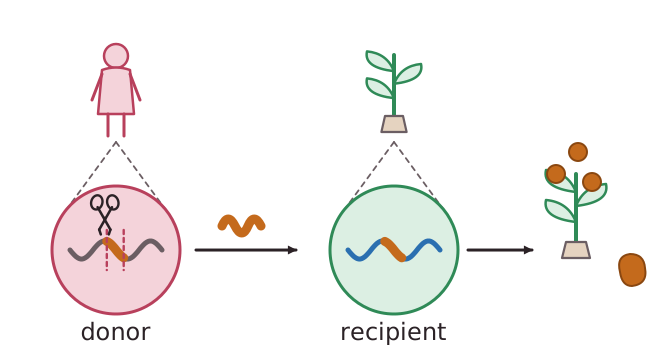
Genetic engineering is a process that modifies the genome of an organism to give it a desirable characteristic. The genome is all the genetic material in an organism. Usually a gene from one organism is cut out and transferred into another organism, which is often a different species. The organism that receives the gene is called a genetically modified (GM) organism.
A gene is a section of DNA that codes for a protein. When the new gene is inside the cells of the GM organism, those cells make the new protein, and this gives the organism its new characteristic. The gene still works in a different species because the genetic code is the same in all living things, so it is described as universal.
There are many examples. Bacteria given the human gene for insulin make insulin for people with diabetes. Golden rice has been given genes so that it makes beta-carotene, which the body uses to make vitamin A. Some crop plants have been given a gene that makes them resist insect pests.