Antibiotics are drugs that kill bacteria or stop them growing. They work because they inhibit cell processes in the bacterium, such as building its cell wall. These processes are not found in the same way in the host's cells, so the antibiotic does not harm the person taking it.
Antibiotics can only be used to treat bacterial infections. Viruses reproduce inside host cells and use the host's own cell processes, so an antibiotic cannot kill a virus without harming the host. For example, tuberculosis is caused by bacteria and can be treated with antibiotics, but HIV is a virus and antibiotics do not work on it. An infection caused by a virus is called a viral infection.
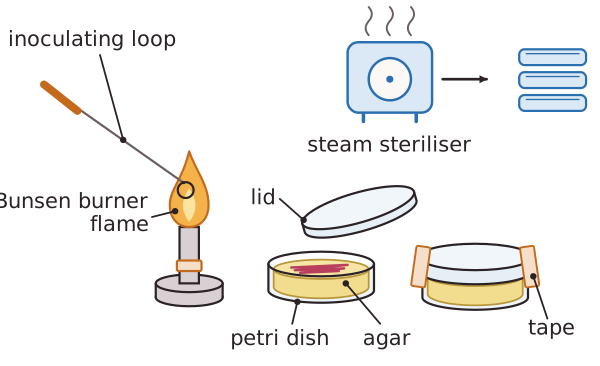
When bacteria are grown in a laboratory, aseptic techniques stop other microorganisms getting in. Growth medium and petri dishes are sterilised in an autoclave, which uses high-pressure steam. Inoculating loops are sterilised before they are used to transfer microorganisms. The petri dishes and culture vials are kept covered to stop contamination.