Immunisation gives a person memory lymphocytes without making them ill. A weakened or inactive form of the pathogen is introduced, the immune system makes antibodies and memory lymphocytes, and if the real pathogen arrives later the secondary response is fast and strong. The main advantage is that the individual is protected from serious disease, and some diseases such as smallpox have been wiped out worldwide.
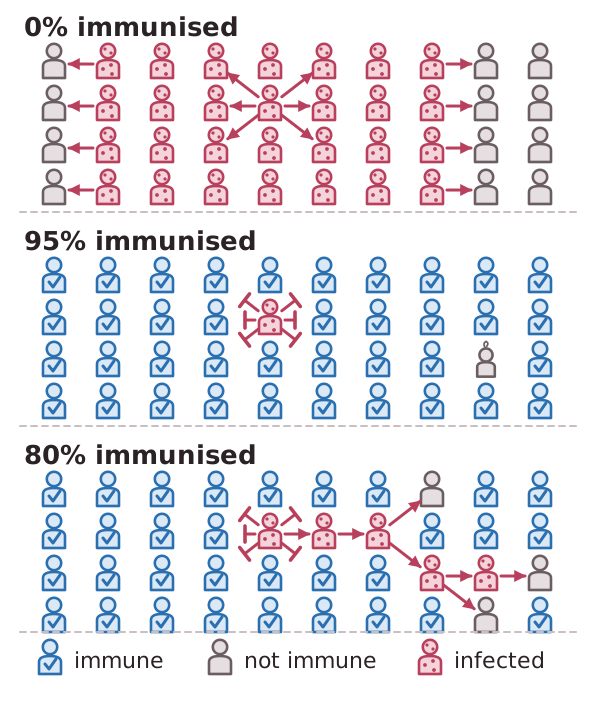
Immunisation also protects people who are not immunised. When a high enough proportion of a population is immune, the pathogen is passed on to very few people and cannot spread easily. This is called herd immunity. It protects newborn babies and people with weak immune systems, who cannot be immunised safely. The more infectious a disease is, the higher the proportion of people who must be immunised. Measles spreads very easily, so about 95% of people need to be immunised. If uptake falls below this level, herd immunity is lost and outbreaks become more likely.
There are disadvantages. Some people get mild side effects such as a sore arm or a fever. Very rarely a person has a severe allergic reaction. No vaccine is 100% effective, so a few immunised people can still catch the disease. A pathogen such as the influenza virus mutates, so new vaccines are needed each year. Overall, the benefits for individuals and for the population far outweigh the risks for most people.