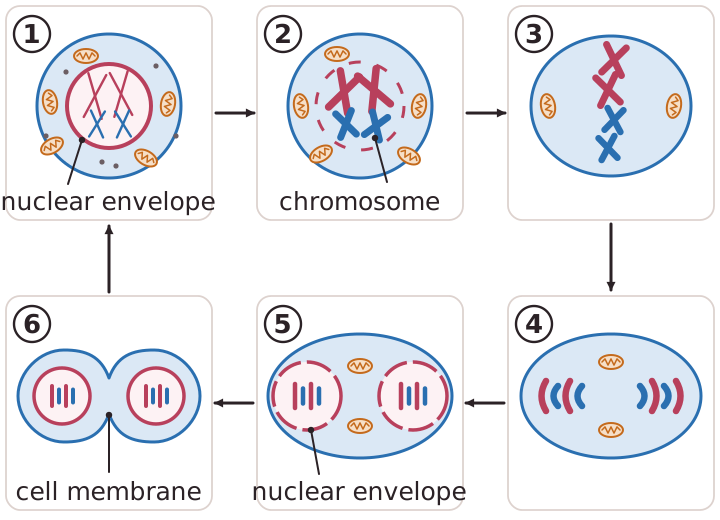
Cells do not divide all the time. The cell cycle is the series of stages a body cell goes through between one division and the next. Most of the cycle is spent in interphase, which is not a resting stage. During interphase the cell grows, makes more organelles such as mitochondria and ribosomes, and copies its DNA, so that each chromosome is made of two identical chromatids joined together.
Mitosis is the division of the nucleus, and it has four stages. In prophase the chromosomes condense and become visible, and the nuclear envelope breaks down. In metaphase the chromosomes line up across the middle of the cell, called the equator. In anaphase the two chromatids of each chromosome are pulled apart to opposite ends of the cell. In telophase a new nuclear envelope forms around each set of chromosomes at the two ends.
The cell cycle ends with cytokinesis, when the cytoplasm and cell membrane divide to make two separate cells. The cycle then starts again in each new cell.