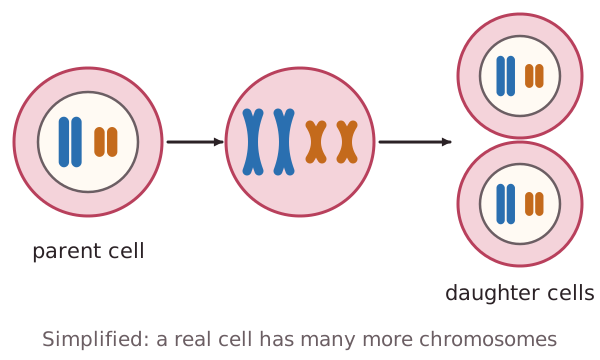
Before a cell divides by mitosis it copies its DNA, so each chromosome is made of two identical chromatids. Mitosis then shares them out equally. The cell divides to make two daughter cells, and the nucleus of each daughter cell has the same number of chromosomes as the parent cell.
Body cells are diploid: they have two sets of chromosomes, one set from each parent. A human body cell has 46 chromosomes, arranged as 23 pairs. When a human body cell divides by mitosis, each daughter cell also has 46 chromosomes in 23 pairs.
The two daughter cells have identical sets of chromosomes and the same genes as the parent cell, so mitosis results in two genetically identical diploid body cells. The number of chromosomes is not halved and no genetic variation is produced.