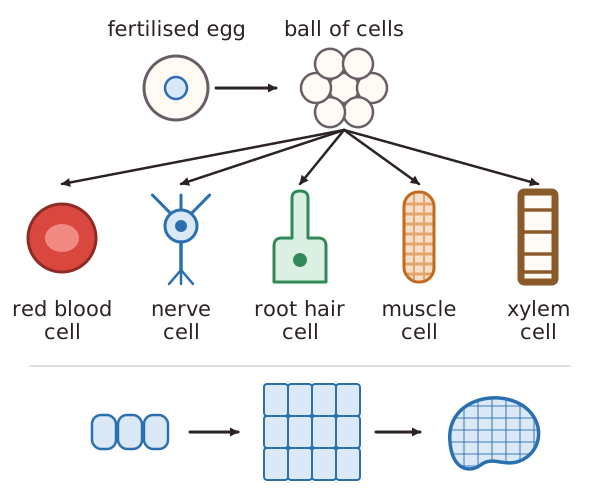
A fertilised egg divides by mitosis to make a ball of cells that are not yet specialised. Cell differentiation is the process by which a cell becomes specialised, with a structure suited to its function. This is how a single cell can become a whole organism made of many different types of cell.
Specialised cells carry out their jobs better than unspecialised cells. Red blood cells have no nucleus, so there is more room for haemoglobin, which carries oxygen. Nerve cells are long so they can carry electrical impulses over a distance. Root hair cells have a long extension that gives a large surface area for absorbing water. Muscle cells contain fibres that contract.
All the cells in an organism have the same genes, but each type of cell uses only the genes it needs. In a multicellular organism, specialised cells of one type group together as a tissue, tissues form organs, and the organs work together. Without differentiation an organism could not be built this way.