Triglycerides are stored under the skin in mammals and around vital organs.They have a low mass to energy ratio and are therefore good for storing energy.Other roles of lipids are:energy storagemembrane formationhormone productionthermal insulationelectrical insulationwaterproofing (feathers and leaves)buoyancy in aquatic animalscushioning and protecting vital organs such as the heart and kidneys.
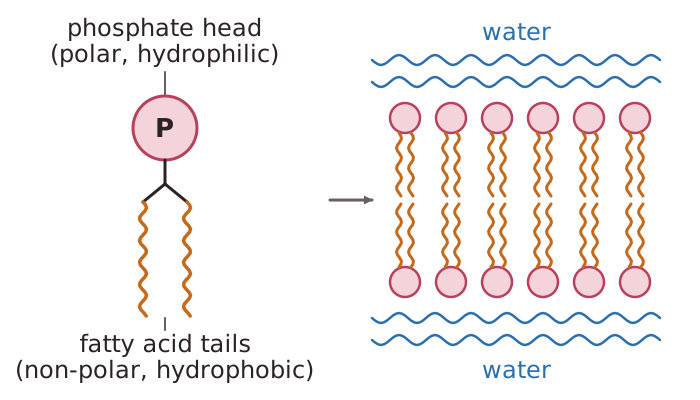
Roles of Lipids
Read the text
Read the text and highlight anything you think is important. When you go on, the text is hidden and you answer from memory.
Specification: OCR Biology A (H020), AS-level, 2.1.2 Biological molecules. Topic: Biological Molecules.
Key terms in this lesson
- triglyceride
- A lipid formed by the condensation of one glycerol molecule with three fatty acid molecules, joined by ester bonds.
More in Biological Molecules
- Triglycerides
- Saturated and Unsaturated Fatty Acids
- Phospholipids
- Sterols
- Test for Lipids
- Lipids and Health
- Amino-acids
- Thin Layer Chromatography
All 63 lessons in Biological Molecules · All OCR AS-level Biology topics