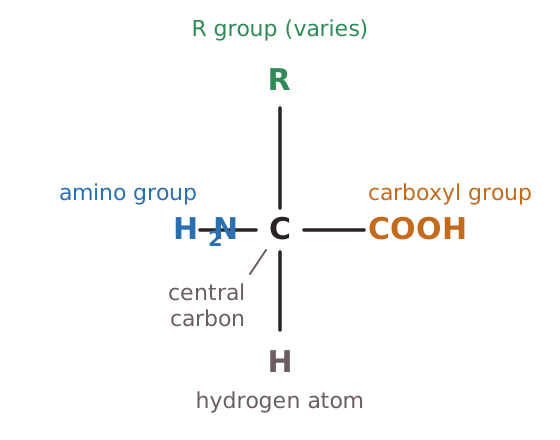
Amino acids are monomers that combine to make polymers called polypeptides.Polypeptides can be joined together to make proteins.There are over 500 known amino-acids. 20 of them occur naturally in proteins.Each amino-acid has four groups around a central carbon atom: an amino group (-NH2) a carboxyl group (-COOH), a hydrogen atom and a residual or R group.The interactions of the R-groups leads to different shapes and properties of the polypeptides made by linking the different amino-acids are into long chains.Nine amino-acids are essential and can only be obtained from the diet, five are non-essential and can be synthesised by the body and six are conditionally essential: the body normally makes them, but they are needed in the diet at certain times, such as in infancy, growth or illness.