 BRAINCAKE
Haemoglobin
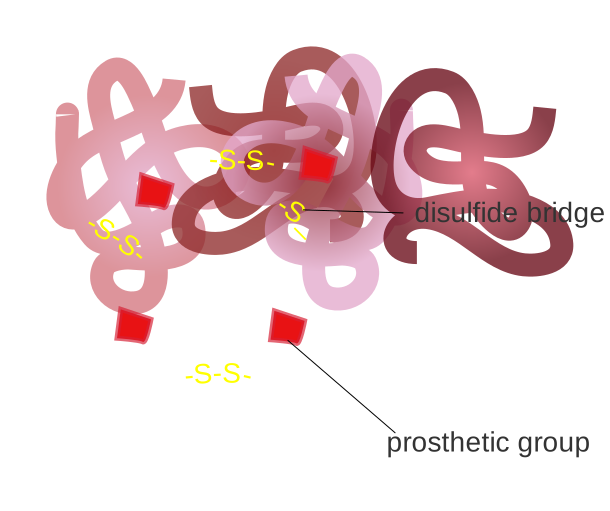
Haemoglobin is a globular protein containing iron that facilitates the transport of oxygen in red blood cells.
Haemoglobin is made up of two alpha and two beta subunits joined together by disulfide bridges.
Sign in free to see the rest of this lesson, the R.E.C.I.P.E. recall steps and the quiz
BrainCake is free. Make an account in seconds and pick up where this page stops.
Key terms in this lesson
- disulfide bridge
- A covalent bond formed between two cysteine residues that helps stabilise the tertiary or quaternary structure of a protein.
- globular protein
- A water-soluble, roughly spherical protein folded so that hydrophilic R groups face outwards, such as an enzyme or haemoglobin.
- prosthetic group
- A non-protein group that is permanently and tightly bound to a protein and is needed for it to function, such as the haem group in haemoglobin.
More in Biological Molecules
- Hydrolysis of Peptides
- Globular Proteins
- Insulin
- Conjugated Proteins
- Catalase
- Fibrous Proteins
- Keratin
- Elastin
All 63 lessons in Biological Molecules · All OCR AS-level Biology topics