Proteins perform many different functions in the cell. Their roles depend on their shape and structure. Their molecular shapes can be one of two different types:Fibrous proteins such as collagen which have structural functions. Fibrous proteins form long parallel chains linked by covalent cross-bridges and hydrogen bonds. An example is collagen which is stable and has a high tensile strength. Fibrous proteins are usually insoluble or have an insoluble form.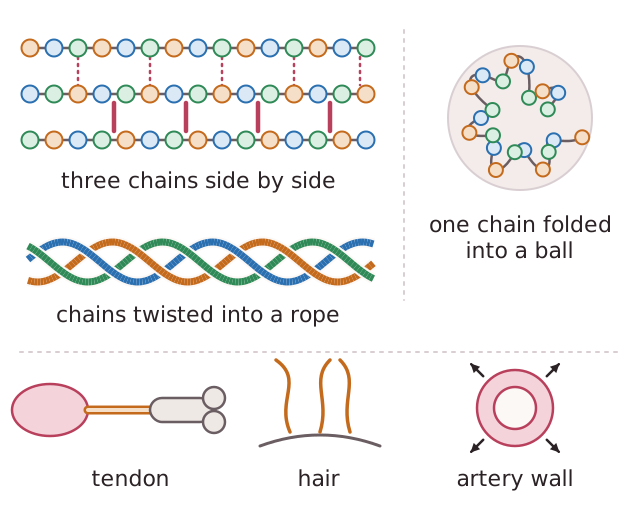 They usually contain only a few types of amino acids usually with small R groups in a repetitive sequence.Fibrous proteins include keratin, collagen and elastin.Globular proteins such as enzymes and haemoglobin carry out metabolic functions. Enzymes are globular proteins that act as biological catalysts. Their function is dependent on their three-dimensional shape and their solubility.