 BRAINCAKE
Collagen
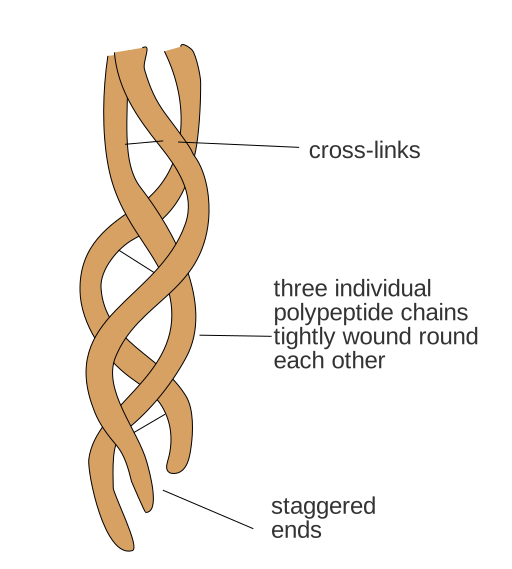
Collagen is a fibrous protein that is found in tendons, bones, muscles, skin and blood. It comprises three-quarters of the skin and a third of all the protein in the human body.
The primary structure is the sequence of amino acids that gives rise to an unbranched polypeptide chain. Every third amino-acid is glycine. The other amino-acids are mostly proline, hydroxyproline and lysine.
Sign in free to see the rest of this lesson, the R.E.C.I.P.E. recall steps and the quiz
BrainCake is free. Make an account in seconds and pick up where this page stops.
Key terms in this lesson
- primary structure
- The sequence of amino acids in a polypeptide chain, joined by peptide bonds.
- tertiary structure
- The overall three-dimensional shape of a single polypeptide chain, formed and held by bonds between R groups.
- quaternary structure
- The structure formed when two or more polypeptide chains, or a polypeptide and a prosthetic group, combine to form a functional protein.
- fibrous protein
- An insoluble, structural protein made of long, parallel polypeptide chains, such as collagen or keratin.
More in Biological Molecules
All 63 lessons in Biological Molecules · All OCR AS-level Biology topics