Biosensors are biological molecules that can be used to detect the presence of another biological molecule such as glucose or can be used to determine their concentration.The compound under investigation is called the analyte.A molecule such as RNA, DNA or a protein or enzyme is immobilised on a test strip.If the target compound is present in the analyte, it interacts with the immobilised molecule and this causes a change in a detector called a transducer.The transducer can respond by generating an electric current or releasing a dye.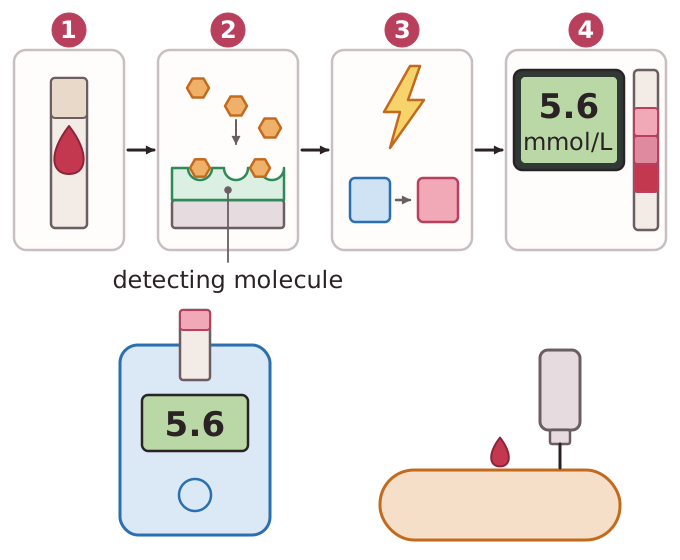 The three essential components of biosensors are
 - molecular recognition
- transduction
- display