Skip to content

Xylem and Phloem

Plants have two transport tissues, xylem and phloem, together called vascular tissue. They are found grouped into vascular bundles.Xylem transports water and mineral ions from the roots up to the leaves. Transport is in one direction only, upwards. Mature xylem vessels are dead, hollow tubes with walls strengthened by lignin, so xylem also supports the plant.Phloem transports organic substances made by the plant, mainly sucrose and amino acids (assimilates). These move from a source, where they are made or released, to a sink, where they are used or stored. Because sources and sinks can be above or below each other, phloem can move substances in both directions. This movement is called translocation. Phloem is made of living cells.The arrangement of the vascular tissue differs between organs:
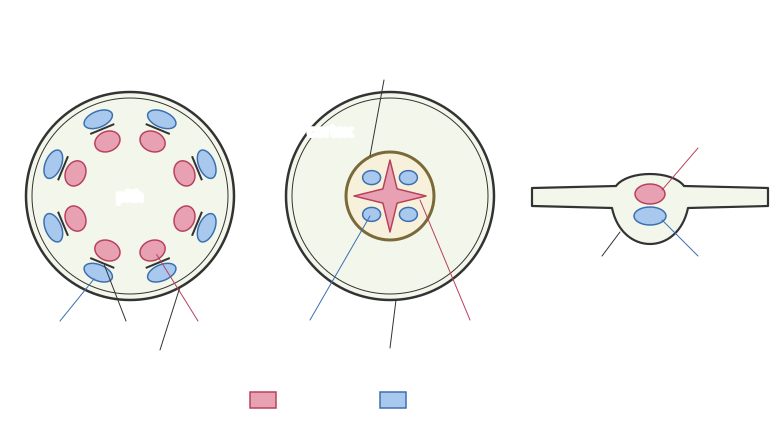
Stem: vascular bundles are arranged in a ring near the outside of the stem, with xylem towards the centre and phloem towards the outside. This gives support like scaffolding.Root: the xylem forms a central star (X) shape, with phloem between its arms. A central arrangement helps the root resist being pulled.Leaf: vascular bundles form the midrib and veins, with xylem on the upper side and phloem on the lower side.

Read the text

Read the text and highlight anything you think is important. When you go on, the text is hidden and you answer from memory.

Specification: Edexcel Biology B (8BI0), AS-level, 4.7 Transport in plants. Topic: Transport in Plants.

Key terms in this lesson

lignin
A strong, waterproof polymer that thickens and strengthens the walls of xylem vessels, preventing them from collapsing under tension.

More in Transport in Plants

All 21 lessons in Transport in Plants · All Edexcel AS-level Biology topics