The second route for water across the root cortex is the apoplast pathway. The apoplast is the system of cell walls and the spaces between cells.Cellulose cell walls are made of fibres with water-filled spaces between them. Water moves through these spaces and through the gaps between cells without entering the cytoplasm. As water is pulled up the xylem, the cohesion between water molecules pulls more water along the cell walls behind it.Because no membranes are crossed and there is little resistance, the apoplast pathway is faster than the symplast pathway and carries most of the water across the cortex.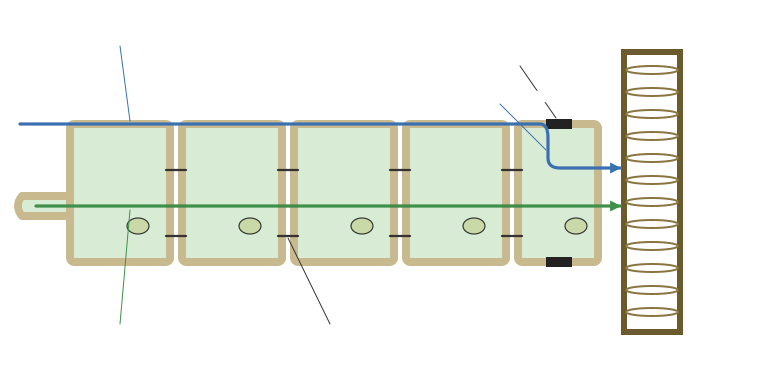
2. Endodermis cells actively transport mineral ions into the xylem. This lowers the water potential of the xylem, so water follows by osmosis, and the ions cannot leak back out through the cell walls.
2. Endodermis cells actively transport mineral ions into the xylem. This lowers the water potential of the xylem, so water follows by osmosis, and the ions cannot leak back out through the cell walls.