Skip to content

Chromosomes

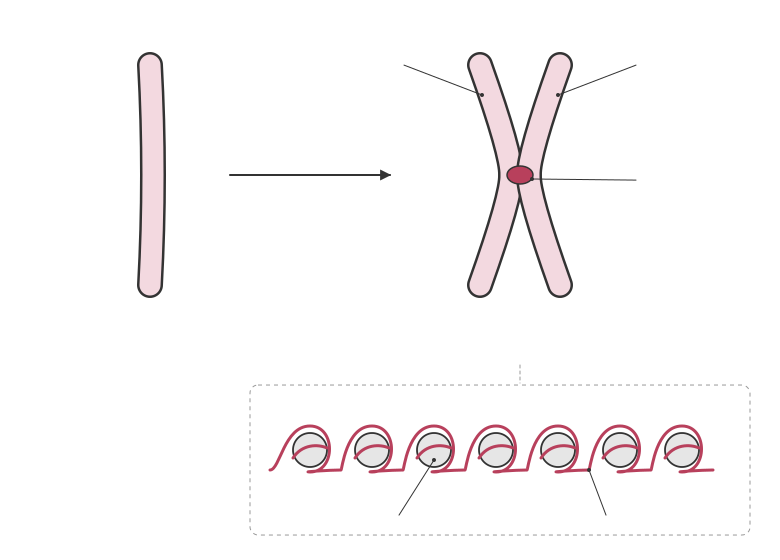
In a eukaryotic cell, the DNA in the nucleus is divided into a number of linear molecules. Each DNA molecule, together with its associated proteins, forms a chromosome.The DNA is wound around proteins called histones. DNA and histones together form chromatin. For most of the cell cycle the chromatin is spread out through the nucleus so its genes can be transcribed, and individual chromosomes cannot be seen. Before the cell divides, the chromatin coils and condenses, making the chromosomes short and thick enough to be seen with a light microscope.Before division, each DNA molecule is replicated. The chromosome then consists of two identical copies called sister chromatids, joined at a region called the centromere.
Human body cells contain 46 chromosomes, in 23 pairs. One chromosome of each pair came from the mother and one from the father. The two members of a pair are homologous chromosomes: they are the same size and shape, have their centromere in the same position, and carry the same genes at the same loci, although they may carry different alleles of those genes.A cell with two sets of chromosomes is diploid (2n; in humans 2n = 46). Gametes contain only one set and are haploid (n = 23).Of the 23 pairs, 22 are autosomes. The remaining pair are the sex chromosomes: XX in females and XY in males. A photograph of a cell's chromosomes arranged in homologous pairs is called a karyotype.

Read the text

Read the text and highlight anything you think is important. When you go on, the text is hidden and you answer from memory.