 BRAINCAKE
The Tracheal System
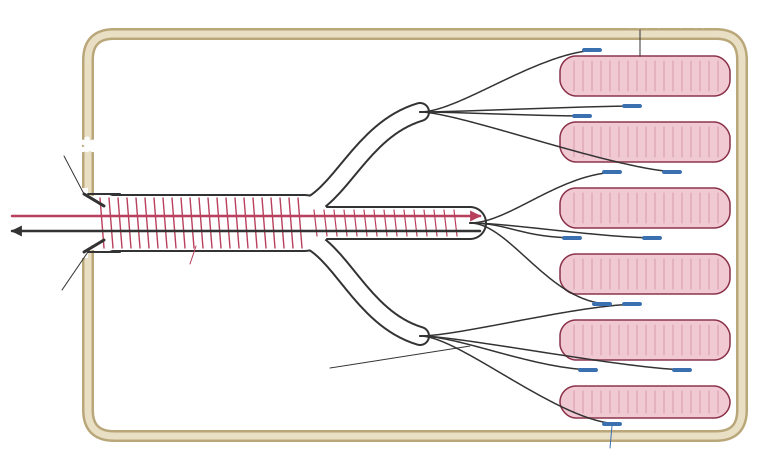
The tracheal system is a network of air-filled tubes that carries oxygen from the spiracles directly to every respiring cell of an insect.
• Spiracles: openings on the body surface, controlled by valves, that lead into the tracheae.
• Tracheae: tubes about 1 mm in diameter, lined with cuticle and supported by spiral rings of chitin. The chitin keeps the tubes open when pressure changes, but it makes the tracheal walls impermeable, so little gas exchange takes place across them.
• Tracheoles: the tracheae branch repeatedly into tracheoles, less than 1 µm in diameter. Each tracheole is a single elongated cell with no chitin lining, so it is permeable to gases. Tracheoles push between and even into cells, especially muscle fibres, so the diffusion distance to mitochondria is very short.
Sign in free to see the rest of this lesson, the R.E.C.I.P.E. recall steps and the quiz
BrainCake is free. Make an account in seconds and pick up where this page stops.
More in Gas Exchange
- Inhalation
- Exhalation
- Protecting the Lungs
- Gas Exchange in Insects
- Very Active Insects
- Gas Exchange in Fish
- Fish Gills
- Ventilating the Gills
All 23 lessons in Gas Exchange · All Edexcel AS-level Biology topics