 BRAINCAKE
Non-competitive Inhibition
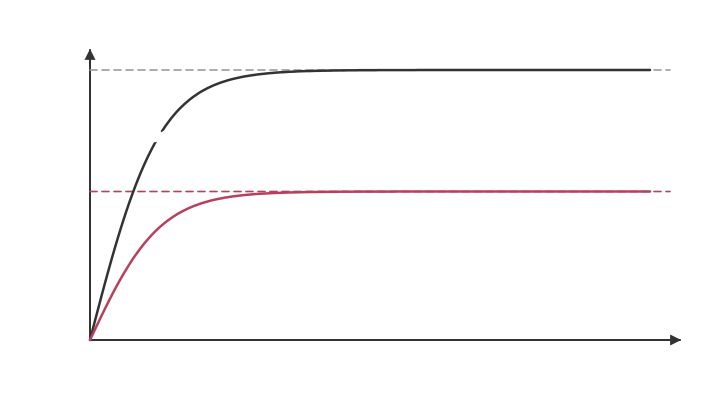
A non-competitive inhibitor does not bind to the active site. Instead it binds to another part of the enzyme, called an allosteric site. Its shape does not need to resemble the substrate.
When the inhibitor binds, it changes the enzyme's tertiary structure. This alters the shape of the active site, so the substrate can no longer bind (or the reaction can no longer be catalysed). Fewer enzyme-substrate complexes form and the rate falls.
Sign in free to see the rest of this lesson, the R.E.C.I.P.E. recall steps and the quiz
BrainCake is free. Make an account in seconds and pick up where this page stops.
Key terms in this lesson
- vmax
- The maximum rate of an enzyme-catalysed reaction, reached when all the active sites present are saturated with substrate.
More in Enzymes
- Measuring Rate of Reaction
- Effect of Substrate Concentration
- Effect of Temperature
- Effect of pH
- Effect of Enzyme Concentration
- Reversible and Irreversible Inhibition
- Competitive Inhibition
- End-Product Inhibition
All 14 lessons in Enzymes · All Edexcel AS-level Biology topics