 BRAINCAKE
Competitive Inhibition
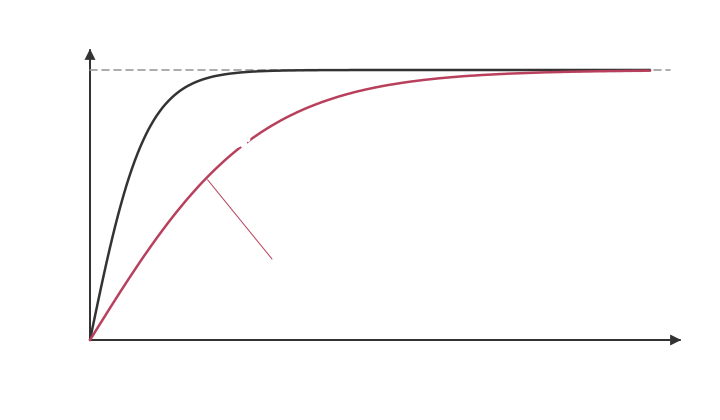
A competitive inhibitor is a molecule with a similar shape to the substrate. It can fit into and bind to the active site, but no reaction takes place (or it reacts very slowly). While the inhibitor occupies the active site, the substrate cannot bind, so fewer enzyme-substrate complexes form and the rate falls.
The inhibitor and the substrate compete for the same active sites. Which one binds depends on their relative concentrations:
• increasing inhibitor concentration increases the inhibition
• increasing substrate concentration reduces the effect, because a substrate molecule is more likely than an inhibitor molecule to collide with any free active site
Sign in free to see the rest of this lesson, the R.E.C.I.P.E. recall steps and the quiz
BrainCake is free. Make an account in seconds and pick up where this page stops.
Key terms in this lesson
- vmax
- The maximum rate of an enzyme-catalysed reaction, reached when all the active sites present are saturated with substrate.
More in Enzymes
- Measuring Rate of Reaction
- Effect of Substrate Concentration
- Effect of Temperature
- Effect of pH
- Effect of Enzyme Concentration
- Reversible and Irreversible Inhibition
- Non-competitive Inhibition
- End-Product Inhibition
All 14 lessons in Enzymes · All Edexcel AS-level Biology topics