 BRAINCAKE
Effect of pH
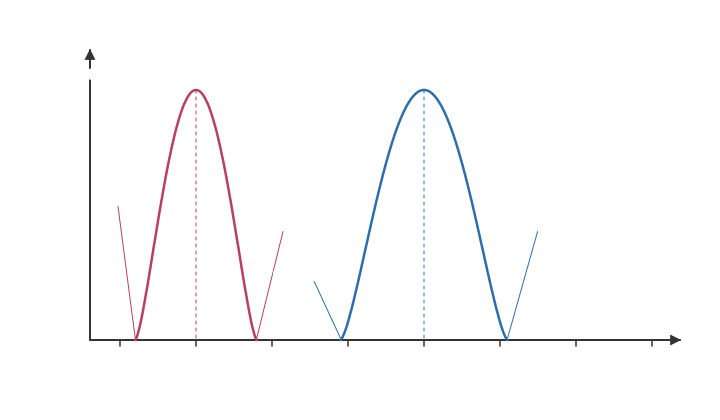
Each enzyme works fastest at a particular pH, its optimum pH. Most intracellular enzymes have an optimum near pH 7, but some differ:
• pepsin, a protease in the stomach: about pH 2
• salivary amylase: about pH 7
• trypsin in the small intestine: about pH 8
pH is a measure of the concentration of hydrogen ions (H+). A change in pH changes the H+ concentration, which affects the enzyme in two ways:
• it alters the charges on the R groups of amino acids in the active site, so the substrate may no longer bind or the reaction may not be catalysed
Sign in free to see the rest of this lesson, the R.E.C.I.P.E. recall steps and the quiz
BrainCake is free. Make an account in seconds and pick up where this page stops.
Key terms in this lesson
- buffer solution
- A solution that resists changes in pH when small amounts of acid or alkali are added.
More in Enzymes
- Induced Fit Hypothesis
- Measuring Rate of Reaction
- Effect of Substrate Concentration
- Effect of Temperature
- Effect of Enzyme Concentration
- Reversible and Irreversible Inhibition
- Competitive Inhibition
- Non-competitive Inhibition
All 14 lessons in Enzymes · All Edexcel AS-level Biology topics