 BRAINCAKE
Measuring Rate of Reaction
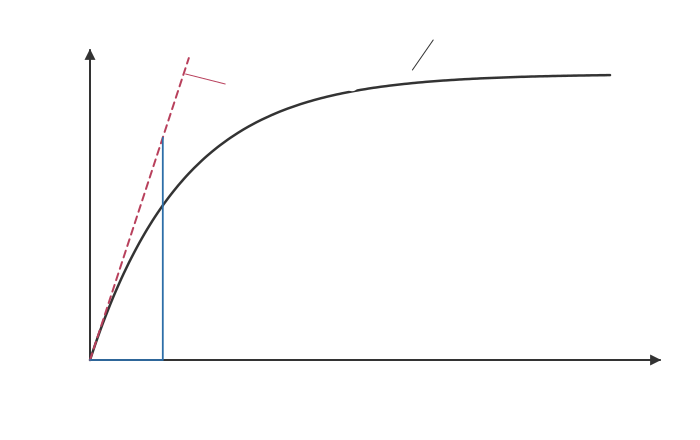
The rate of an enzyme-controlled reaction is the change in the amount of substrate or product per unit time. It can be measured by following either:
• how quickly a product appears, for example collecting the oxygen released when catalase breaks down hydrogen peroxide, using a gas syringe or an upturned measuring cylinder
• how quickly a substrate disappears, for example the loss of starch when amylase acts, tested with iodine solution (blue-black to orange-brown), or measured with a colorimeter
Sign in free to see the rest of this lesson, the R.E.C.I.P.E. recall steps and the quiz
BrainCake is free. Make an account in seconds and pick up where this page stops.
Key terms in this lesson
- colorimeter
- An instrument that measures the amount of light of a particular colour absorbed by, or transmitted through, a solution.
More in Enzymes
- Extra-Cellular and Intracellular Enzymes
- Biological Catalysts
- Lock and Key Hypothesis
- Induced Fit Hypothesis
- Effect of Substrate Concentration
- Effect of Temperature
- Effect of pH
- Effect of Enzyme Concentration
All 14 lessons in Enzymes · All Edexcel AS-level Biology topics