 BRAINCAKE
End-Product Inhibition
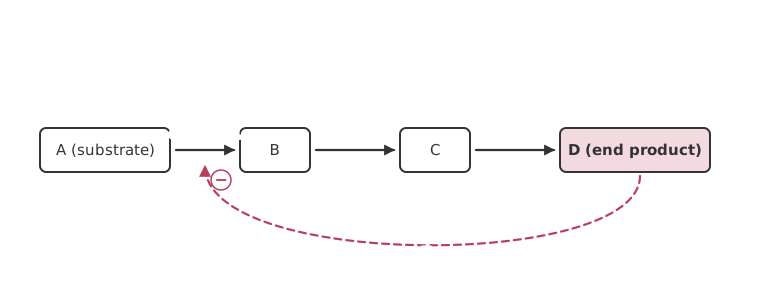
End-product inhibition is a way that a cell controls a metabolic pathway: the final product of the pathway inhibits an enzyme that acts near the start of it. It is an example of negative feedback.
Most metabolic pathways are a chain of reactions, each catalysed by its own enzyme:
A → B → C → D (end product)
Sign in free to see the rest of this lesson, the R.E.C.I.P.E. recall steps and the quiz
BrainCake is free. Make an account in seconds and pick up where this page stops.
Key terms in this lesson
- negative feedback
- A control mechanism in which a change triggers a response that counteracts the change, returning a system towards a set level.
- allosteric site
- A site on an enzyme other than the active site to which a molecule can bind, changing the shape of the active site.
More in Enzymes
- Measuring Rate of Reaction
- Effect of Substrate Concentration
- Effect of Temperature
- Effect of pH
- Effect of Enzyme Concentration
- Reversible and Irreversible Inhibition
- Competitive Inhibition
- Non-competitive Inhibition
All 14 lessons in Enzymes · All Edexcel AS-level Biology topics