 BRAINCAKE
Biological Catalysts
A catalyst is a substance that increases the rate of a chemical reaction without being used up. Enzymes are biological catalysts.
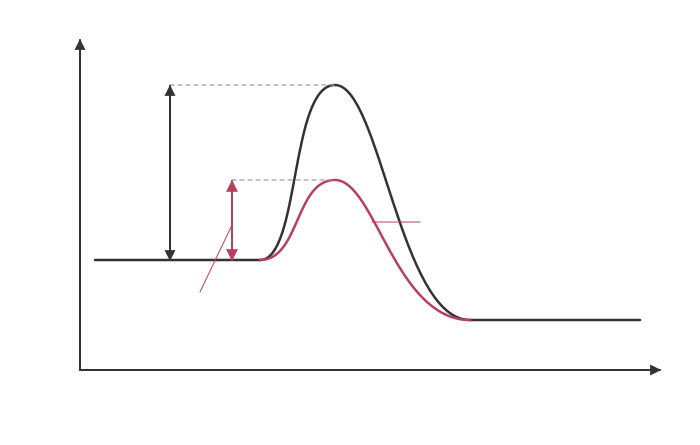
For any reaction to happen, the reacting molecules need a minimum amount of energy, the activation energy. Enzymes work by lowering the activation energy. This means many more molecules have enough energy to react, so reactions happen quickly at body temperature (about 37 °C in humans), which is far too low for most of them to happen at a useful rate otherwise.
Sign in free to see the rest of this lesson, the R.E.C.I.P.E. recall steps and the quiz
BrainCake is free. Make an account in seconds and pick up where this page stops.
Key terms in this lesson
- enzyme-substrate complex
- A temporary structure formed when a substrate molecule binds to the active site of an enzyme.
More in Enzymes
- Enzymes
- Extra-Cellular and Intracellular Enzymes
- Lock and Key Hypothesis
- Induced Fit Hypothesis
- Measuring Rate of Reaction
- Effect of Substrate Concentration
- Effect of Temperature
- Effect of pH
All 14 lessons in Enzymes · All Edexcel AS-level Biology topics