A single mRNA molecule does not have to be translated by just one ribosome at a time. As soon as one ribosome has moved a short way along the mRNA, another ribosome can attach at the start codon and begin translating behind it. A group of ribosomes translating the same mRNA molecule at the same time is called a polysome (or polyribosome).Under the electron microscope a polysome looks like a string of beads: the ribosomes are the beads and the mRNA is the thread.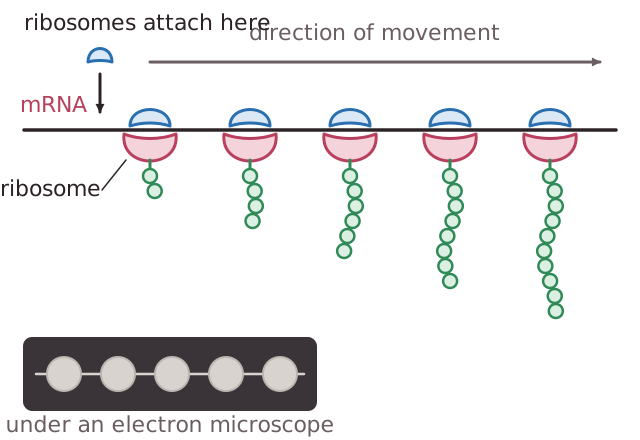 Each ribosome in the polysome makes its own complete, separate polypeptide, and all of these polypeptides are identical because they are made from the same mRNA. The ribosomes that attached first have moved furthest along the mRNA, so they carry the longest growing polypeptide chains.Polysomes increase the rate of protein synthesis. Many copies of a protein can be made quickly from one mRNA, which is important because mRNA is short-lived.Polysomes can be free in the cytoplasm (making proteins used inside the cell) or attached to the rough endoplasmic reticulum (often making proteins for secretion).Worked example: a ribosome takes 40 s to make one polypeptide. On its own, in 2 minutes (120 s) it makes 120 ÷ 40 = 3 polypeptides. A polysome of 5 ribosomes on the same mRNA makes about 5 × 3 = 15 polypeptides in the same time.