 BRAINCAKE
Protein Structure
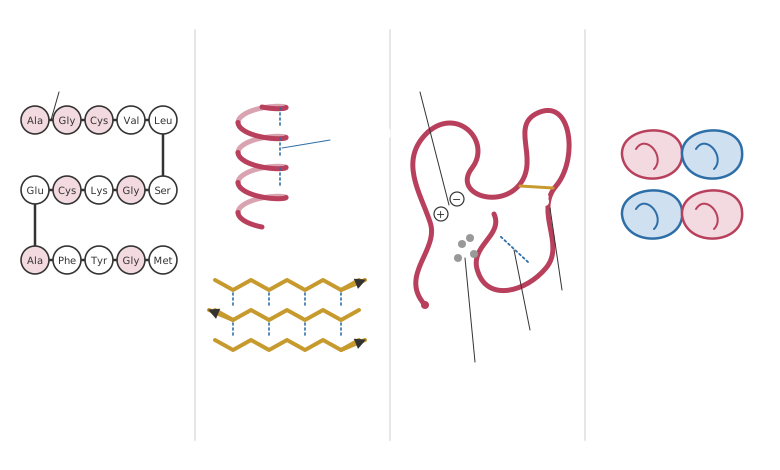
Proteins are described at four levels of structure.
Primary structure is the sequence of amino acids in the polypeptide chain, held together by peptide bonds. It is set by the gene coding for the protein. Changing even one amino acid can change the whole shape of the protein.
Secondary structure is the local coiling or folding of the chain into an α-helix or a β-pleated sheet, held by hydrogen bonds between the C=O and N–H groups of the backbone.
Sign in free to see the rest of this lesson, the R.E.C.I.P.E. recall steps and the quiz
BrainCake is free. Make an account in seconds and pick up where this page stops.
Key terms in this lesson
- mutation
- A change in the genetic material of a cell, either in the base sequence of DNA or in chromosome structure or number.
More in Biological Molecules
- Amino-acids
- Hydrogen Bonding
- Disulfide Bridges
- Ionic Bonds
- Globular Proteins
- Fibrous Proteins
- Collagen
- Conjugated Proteins
All 25 lessons in Biological Molecules · All Edexcel AS-level Biology topics