 BRAINCAKE
Starch
Starch is the energy-storage polysaccharide of plants. It is stored as starch grains in chloroplasts and in amyloplasts of storage organs such as potato tubers and seeds. Starch is a mixture of two polymers of α-glucose.
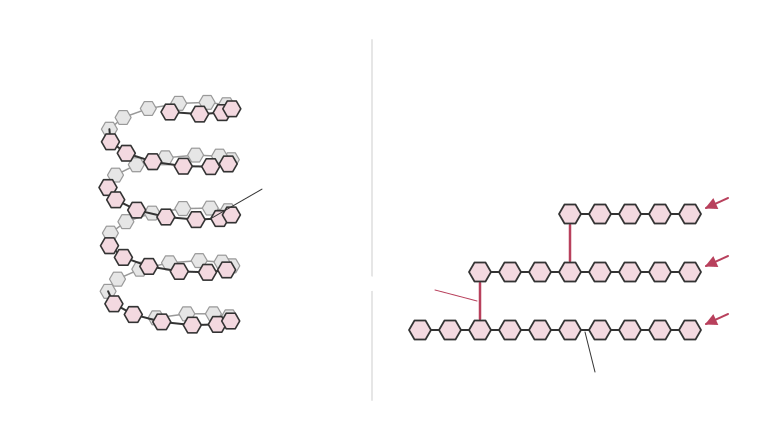
Amylose (about 20 to 30% of starch) is an unbranched chain of α-glucose joined by 1,4-glycosidic bonds. Because of the angle of these bonds, the chain coils into a helix, held by hydrogen bonds. The helix is compact, so a lot of glucose fits into a small space.
Sign in free to see the rest of this lesson, the R.E.C.I.P.E. recall steps and the quiz
BrainCake is free. Make an account in seconds and pick up where this page stops.
Key terms in this lesson
- respiratory substrate
- A molecule, such as glucose, that is broken down in respiration to release energy for the synthesis of ATP.
More in Biological Molecules
- Monosaccharides
- Disaccharides
- Test for Sugars
- Polysaccharides
- Test for Starch
- Glycogen
- Cellulose
- The Nature of Lipids
All 25 lessons in Biological Molecules · All Edexcel AS-level Biology topics