 BRAINCAKE
Structure of the Human Heart
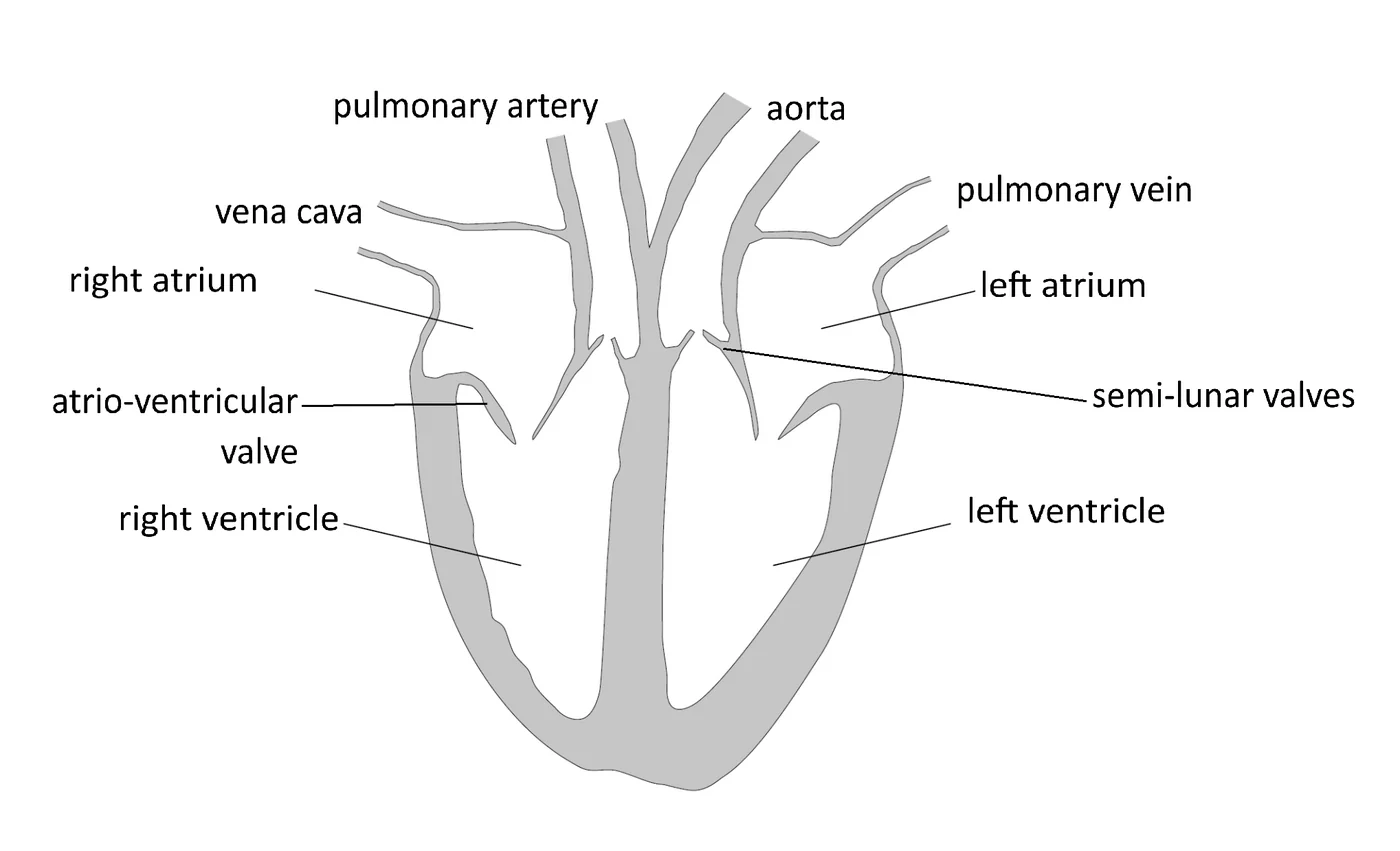
The human heart is made of left and right pumps. The walls are made of cardiac muscle and connective tissue. A thin membrane lines the heart.
The left side of the heart pumps oxygenated blood from the lungs to the body. The right side of the heart pumps deoxygenated blood from the body to the lungs.
Each side has a thin-walled atrium that is responsible for collecting blood. Blood is forced into the thicker walled ventricles through valves.
Sign in free to see the rest of this lesson, the R.E.C.I.P.E. recall steps and the quiz
BrainCake is free. Make an account in seconds and pick up where this page stops.
More in Mass Transport in Animals
- Myoglobin
- The Need for a Transport System
- Features of a Transport System
- Circulatory Systems
- Coronary Arteries
- Cardiovascular Disease
- The Cardiac Cycle
- Valves and Control of Blood Flow
All 27 lessons in Mass Transport in Animals · All AQA AS-level Biology topics