Skip to content

Cell Wall

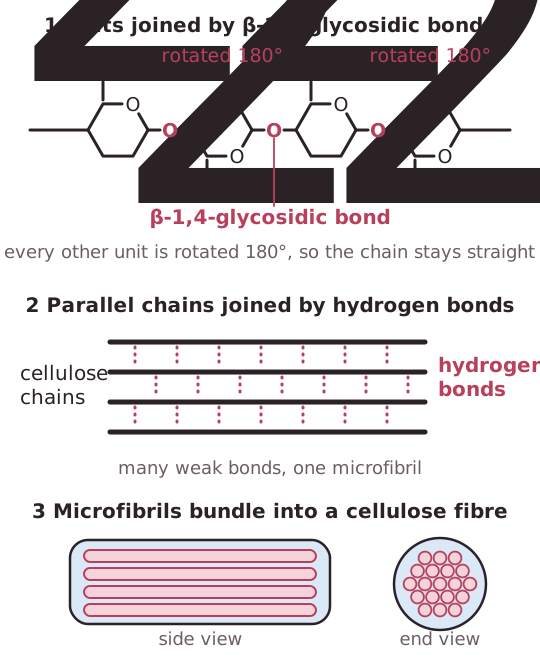
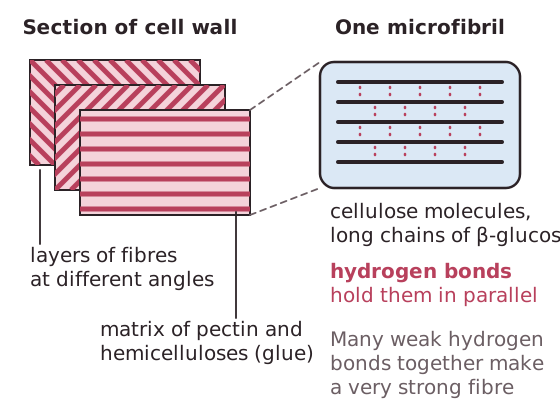
The cell wall encloses all plant cells. It is made of cellulose.Cellulose is a polymer of beta-glucose. Long molecules of cellulose are bound together to form strong fibres.The fibres form a mat glued together by pectin and hemicelluloses.The cell wall is freely permeable to water and small molecules.When the cell is full of water, it becomes turgid. The cell contents press against the cell wall making it rigid. This supports the cell and the plant as a whole.The cell wall also acts as a defence mechanism against the entry of pathogens.
Read the text

Read the text and highlight anything you think is important. When you go on, the text is hidden and you answer from memory.

Specification: AQA Biology (7401), AS-level, 3.2.1.1 Structure of eukaryotic cells and 3.2.1.2 Structure of prokaryotic cells and of viruses. Topic: Cell Structure.

Key terms in this lesson

polymer
A large molecule made of many repeating monomer units joined together by covalent bonds.
pathogen
A microorganism, such as a virus, bacterium, fungus or protoctist, that causes disease.

More in Cell Structure

All 26 lessons in Cell Structure · All AQA AS-level Biology topics