A transgenic plant contains a gene from a different species. The most common method of producing one uses the soil bacterium Agrobacterium tumefaciens.Method
1. In nature, Agrobacterium infects wounded plants and transfers a section of its Ti plasmid, called T-DNA, into the plant's chromosomes, causing a tumour (crown gall).
2. Scientists remove the tumour-causing genes from the T-DNA and insert the desired gene, together with a marker gene such as herbicide or antibiotic resistance.
3. The modified bacteria are mixed with small pieces of plant tissue, such as leaf discs. Only the T-DNA is transferred into the plant cells' chromosomes.
4. The plant tissue is placed on a medium containing the herbicide or antibiotic, so only transformed cells survive.
5. Transformed cells are grown into whole plants by tissue culture, using the plant hormones auxin and cytokinin.Because the whole plant grows from one transformed cell, every cell of the plant contains the new gene, including the cells that make pollen and ovules, so the gene is passed to the seeds.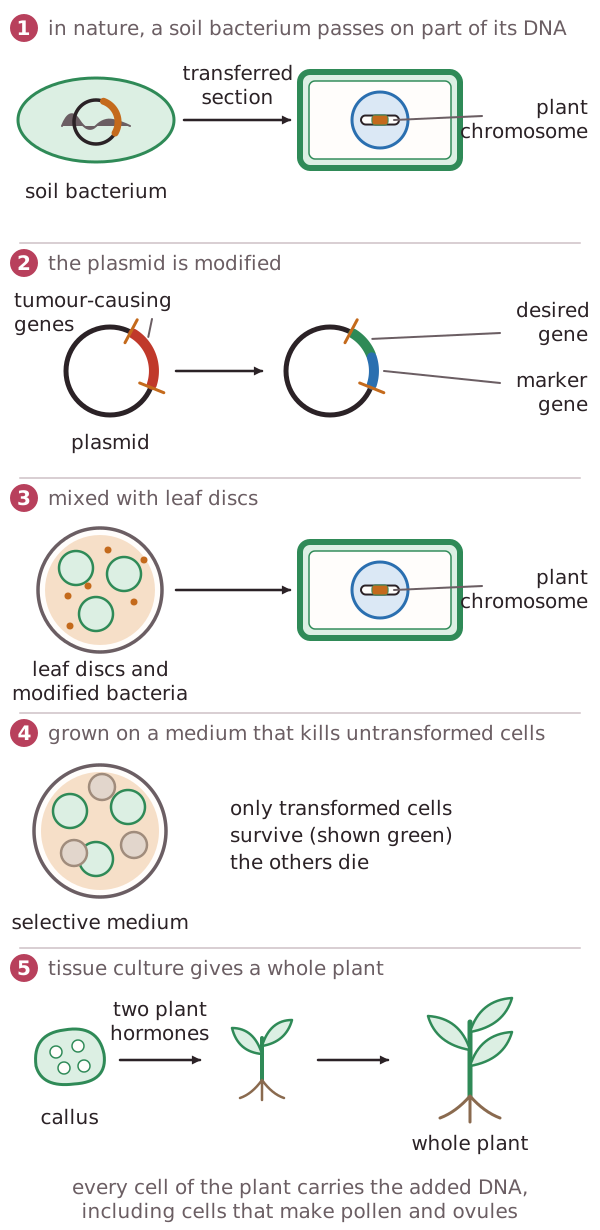 Agrobacterium works best with dicotyledonous (broad-leaved) plants such as tomato, soya and cotton. Cereals are usually transformed with a gene gun instead.Examples
• Bt maize and Bt cotton contain a gene from the bacterium Bacillus thuringiensis coding for a Cry protein toxin that kills insects that eat the plant.
• Golden Rice contains genes that make it produce beta-carotene.
1. In nature, Agrobacterium infects wounded plants and transfers a section of its Ti plasmid, called T-DNA, into the plant's chromosomes, causing a tumour (crown gall).
2. Scientists remove the tumour-causing genes from the T-DNA and insert the desired gene, together with a marker gene such as herbicide or antibiotic resistance.
3. The modified bacteria are mixed with small pieces of plant tissue, such as leaf discs. Only the T-DNA is transferred into the plant cells' chromosomes.
4. The plant tissue is placed on a medium containing the herbicide or antibiotic, so only transformed cells survive.
5. Transformed cells are grown into whole plants by tissue culture, using the plant hormones auxin and cytokinin.Because the whole plant grows from one transformed cell, every cell of the plant contains the new gene, including the cells that make pollen and ovules, so the gene is passed to the seeds.
Agrobacterium works best with dicotyledonous (broad-leaved) plants such as tomato, soya and cotton. Cereals are usually transformed with a gene gun instead.Examples• Bt maize and Bt cotton contain a gene from the bacterium Bacillus thuringiensis coding for a Cry protein toxin that kills insects that eat the plant.
• Golden Rice contains genes that make it produce beta-carotene.