Genetic modification of animals is used in agriculture, medicine and research. Transgenic animals are usually made by microinjecting DNA into fertilised eggs.Pharming
Producing pharmaceutical proteins in GM animals is called pharming.
1. The human gene for the protein is joined to the promoter of a milk protein gene, such as β-lactoglobulin.
2. This DNA is microinjected into a fertilised egg of a sheep, goat or cow, and the egg is implanted into a surrogate.
3. Female offspring that have the gene are identified. Because the gene has a milk protein promoter, it is expressed only in the mammary glands.
4. The human protein is purified from the milk.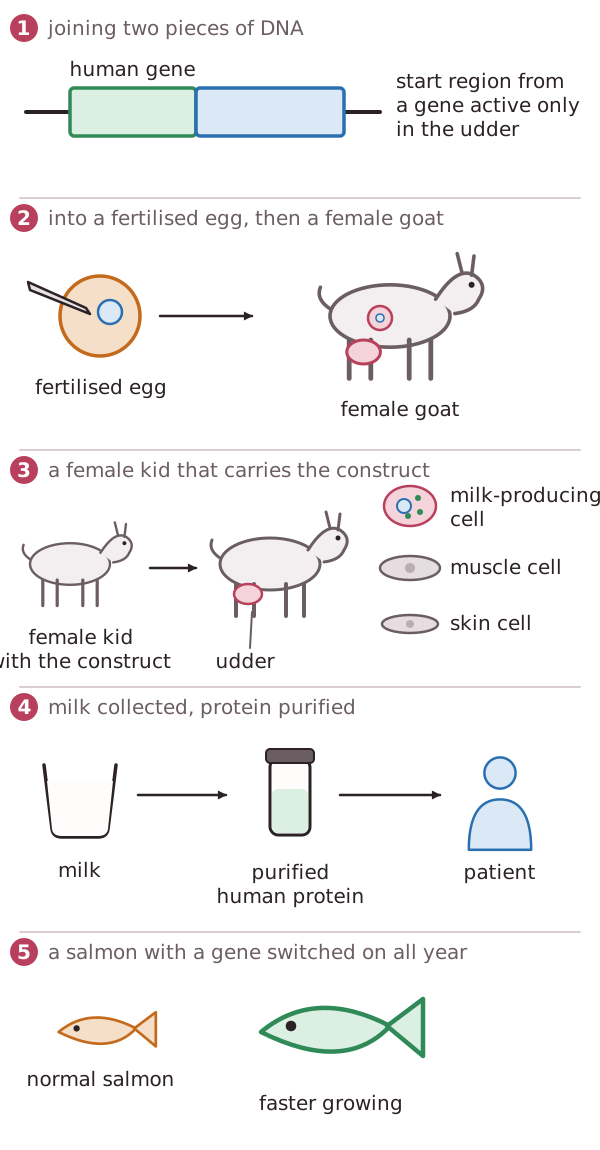 For example, goats have been modified to produce human antithrombin, an anticoagulant, in their milk, for patients who lack it. Collecting a protein from milk is useful because the animal does not need to be killed, and mammals can make complex human proteins, correctly folded and modified, that bacteria cannot.Agriculture
GM salmon grow faster because they contain an extra growth hormone gene from another salmon species, with a promoter that keeps it switched on all year. They reach market size in about half the usual time. The fish are kept in land-based tanks and are made sterile to stop them breeding with wild salmon.Concerns
• Animal welfare: some GM animals have health problems, and many eggs and animals are used to produce a few successful ones.
• Escaped GM animals could breed with wild populations.
Producing pharmaceutical proteins in GM animals is called pharming.
1. The human gene for the protein is joined to the promoter of a milk protein gene, such as β-lactoglobulin.
2. This DNA is microinjected into a fertilised egg of a sheep, goat or cow, and the egg is implanted into a surrogate.
3. Female offspring that have the gene are identified. Because the gene has a milk protein promoter, it is expressed only in the mammary glands.
4. The human protein is purified from the milk.
For example, goats have been modified to produce human antithrombin, an anticoagulant, in their milk, for patients who lack it. Collecting a protein from milk is useful because the animal does not need to be killed, and mammals can make complex human proteins, correctly folded and modified, that bacteria cannot.AgricultureGM salmon grow faster because they contain an extra growth hormone gene from another salmon species, with a promoter that keeps it switched on all year. They reach market size in about half the usual time. The fish are kept in land-based tanks and are made sterile to stop them breeding with wild salmon.Concerns
• Animal welfare: some GM animals have health problems, and many eggs and animals are used to produce a few successful ones.
• Escaped GM animals could breed with wild populations.