A pure culture contains only one species (or strain) of microorganism. Pure cultures are needed to identify a microorganism, to test it with antibiotics, or to use it in industry, because a contaminant would give misleading results.The usual method is the streak plate, which thins out the cells so that some grow as separate colonies:
1. Using aseptic technique, flame an inoculating loop, let it cool and dip it into the mixed culture.
2. Streak the loop in a zigzag across one edge of an agar plate (section 1).
3. Flame and cool the loop. Drag it once through the end of section 1 and streak a new zigzag in section 2.
4. Repeat for sections 3 and 4, flaming the loop between each.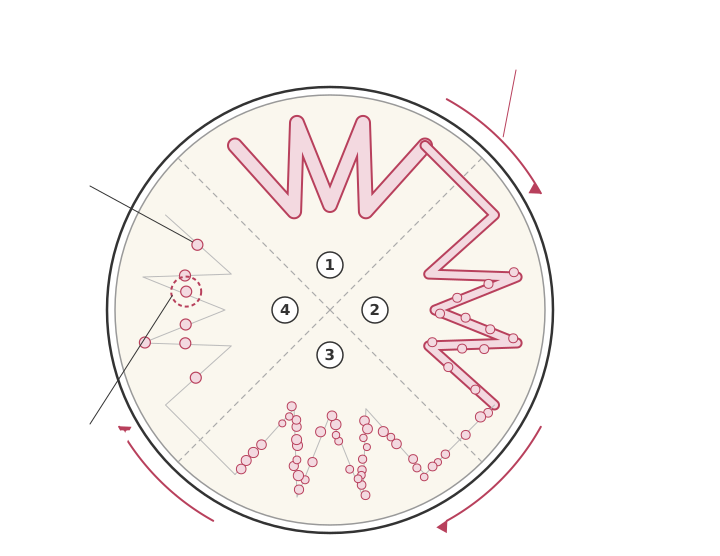
1. Using aseptic technique, flame an inoculating loop, let it cool and dip it into the mixed culture.
2. Streak the loop in a zigzag across one edge of an agar plate (section 1).
3. Flame and cool the loop. Drag it once through the end of section 1 and streak a new zigzag in section 2.
4. Repeat for sections 3 and 4, flaming the loop between each.