 BRAINCAKE
Energy Supply during Muscle Contraction
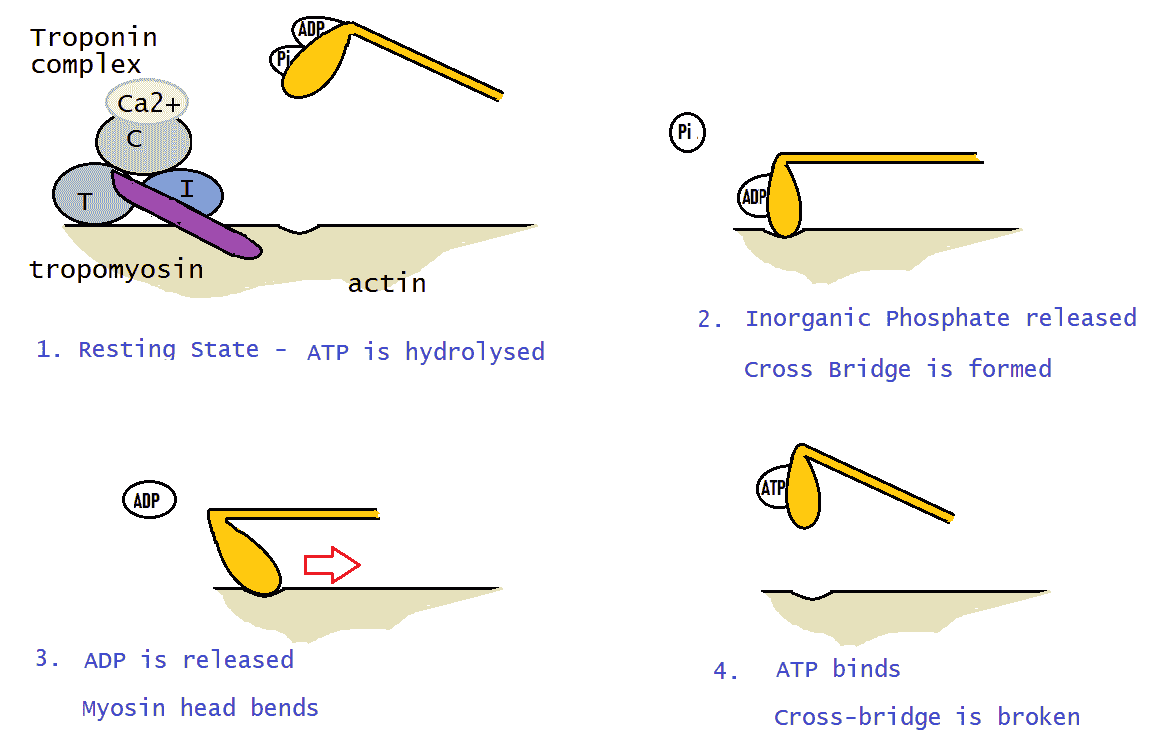
Large quantities of ATP are required for the movement of the myosin heads, the active transport of calcium ions into the SR and the sodium-potassium pump restoring the sarcolemma to its resting potential after an action potential.
Most of the ATP comes from oxidative phosphorylation which occurs in the presence of oxygen during aerobic respiration. Aerobic respiration is therefore sufficient for long periods of moderate exercise.
Sign in free to see the rest of this lesson, the R.E.C.I.P.E. recall steps and the quiz
BrainCake is free. Make an account in seconds and pick up where this page stops.
Key terms in this lesson
- sarcolemma
- The specialised plasma membrane surrounding a muscle fibre.
- sarcoplasmic reticulum
- A specialised form of endoplasmic reticulum in muscle fibres that stores and releases calcium ions during contraction.
- myosin
- A thick protein myofilament with a hinged globular head that binds to actin and ATP and pulls actin filaments during muscle contraction.
- action potential
- A rapid, temporary reversal of the electrical charge across an axon membrane (depolarisation followed by repolarisation) that occurs when a stimulus exceeds the threshold value.
- resting potential
- The potential difference of about -70mV maintained across the membrane of a neurone that is not conducting an impulse, with the inside negative relative to the outside.