 BRAINCAKE
Neuromuscular Junction
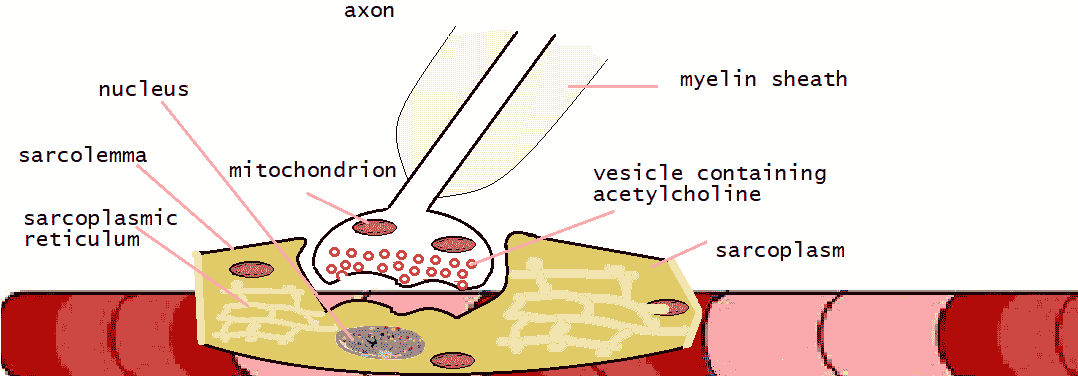
When an action potential arrives at a neuromuscular junction it stimulates calcium ion channels to open. Calcium ions diffuse from the synapse into the synaptic knob. This causes vesicles to fuse with the presynaptic membrane and release acetylcholine. Acetylcholine binds to receptors on the post-synaptic membrane opening sodium channels. The influx of sodium ions causes depolarisation of the sarcolemma.
Sign in free to see the rest of this lesson, the R.E.C.I.P.E. recall steps and the quiz
BrainCake is free. Make an account in seconds and pick up where this page stops.
Key terms in this lesson
- sarcolemma
- The specialised plasma membrane surrounding a muscle fibre.
- synapse
- The junction between two neurones, or between a neurone and a muscle or gland cell, where information is transmitted chemically.
- action potential
- A rapid, temporary reversal of the electrical charge across an axon membrane (depolarisation followed by repolarisation) that occurs when a stimulus exceeds the threshold value.
- depolarisation
- A change in the potential difference across a membrane that makes the inside less negative (or positive) relative to the outside, caused by an influx of sodium ions.