 BRAINCAKE
The Role of Ca2+ and ATP in Muscle Contraction
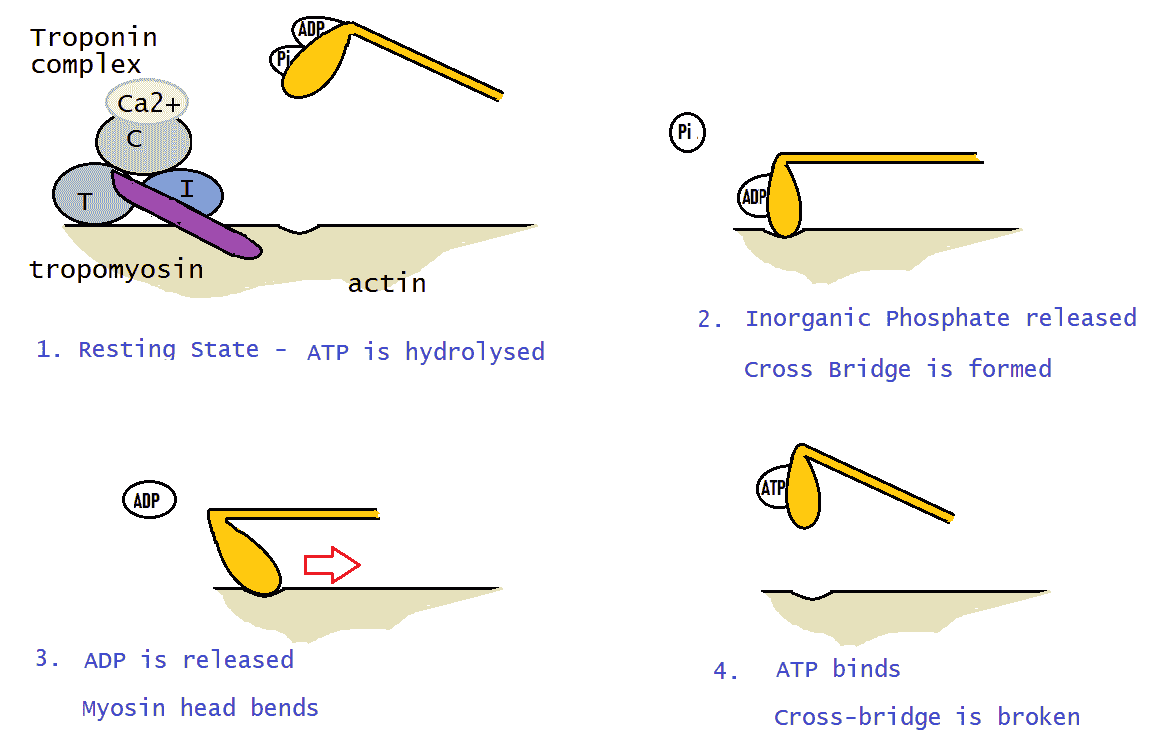
- Calcium ions have a dual role in muscle contraction.
- They bind to troponin to move tropomyosin and expose the myosin binding sites
- They activate the ATPase activity of the myosin head
Sign in free to see the rest of this lesson, the R.E.C.I.P.E. recall steps and the quiz
BrainCake is free. Make an account in seconds and pick up where this page stops.
Key terms in this lesson
- actin
- A thin protein myofilament in a myofibril that, together with myosin, slides during muscle contraction; its myosin-binding sites are covered by tropomyosin in resting muscle.
- myosin
- A thick protein myofilament with a hinged globular head that binds to actin and ATP and pulls actin filaments during muscle contraction.
- tropomyosin
- A rod-shaped protein that blocks the myosin-binding sites on actin filaments in resting muscle and is moved by troponin when calcium ions bind.
- troponin
- A globular protein complex bound to tropomyosin on actin filaments that changes shape when calcium ions bind, moving tropomyosin and exposing the myosin-binding sites.
- ATP
- Adenosine triphosphate, the universal energy currency of cells, formed by adding an inorganic phosphate to ADP and hydrolysed to release energy for cellular reactions.