 BRAINCAKE
Endocrine Glands
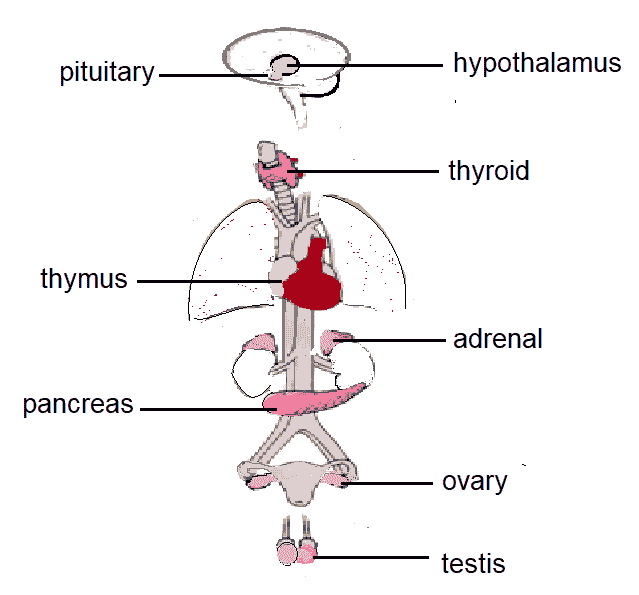
Endocrine glands are made of groups of cells specialised to secrete chemicals called hormones directly into the blood.
The pancreas produces insulin and glucagon to regulate blood sugar concentrations.
Sign in free to see the rest of this lesson, the R.E.C.I.P.E. recall steps and the quiz
BrainCake is free. Make an account in seconds and pick up where this page stops.
Key terms in this lesson
- hormone
- A chemical messenger, secreted by an endocrine gland directly into the blood, that travels to target cells bearing complementary receptors and brings about a response.
- glucagon
- A hormone secreted by the alpha cells of the islets of Langerhans in response to low blood glucose concentration, which raises blood glucose by stimulating glycogenolysis and gluconeogenesis in the liver.
- insulin
- A hormone secreted by the beta cells of the islets of Langerhans in response to a rise in blood glucose concentration, which lowers blood glucose by stimulating cells to take up and use or store glucose.
- ADH
- Antidiuretic hormone, released by the posterior pituitary gland in response to a fall in blood water potential, which increases the permeability of the collecting duct to water by inserting aquaporins.
More in Hormonal Communication
- Hormones
- The Adrenal Glands
- Adrenal Cortex
- Adrenal Medulla
- Pancreas
- Blood glucose concentration
- Insulin
- Glucagon
All 11 lessons in Hormonal Communication · All AQA A-level Biology topics