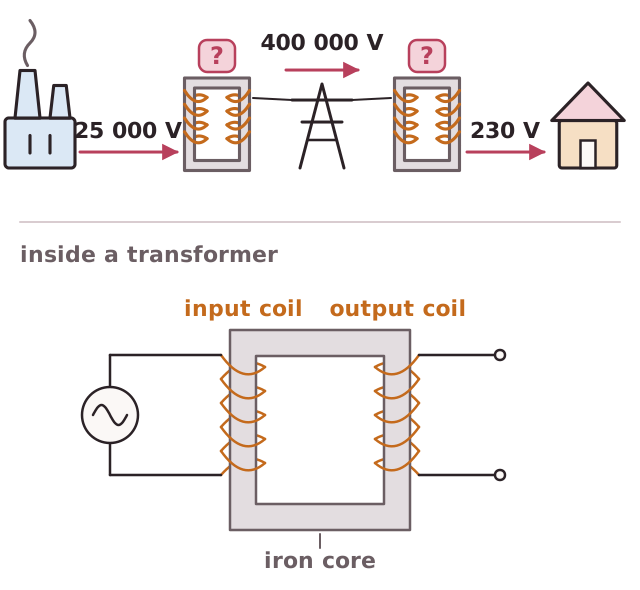
When current flows through a cable the cable heats up. This heat is wasted as thermal energy and is lost to the surroundings. The bigger the current, the more energy is wasted, and the loss rises with the square of the current. So the way to waste less energy is to make the current in the cables as small as possible.
Electrical power is current multiplied by potential difference: P = I × V. For the same power, a higher voltage means a smaller current. Sending 1 000 000 W at 100 000 V needs a current of 10 A. Sending the same power at 10 000 V needs 100 A. Ten times the current wastes about a hundred times as much energy as heat.
This is why the national grid uses high voltage. Step-up transformers raise the voltage at the power station so the current is small, the cables heat less and less energy is wasted. Step-down transformers then lower the voltage near homes so it is safe to use. Transformers waste very little energy themselves, so the whole system is an efficient way to transfer energy.