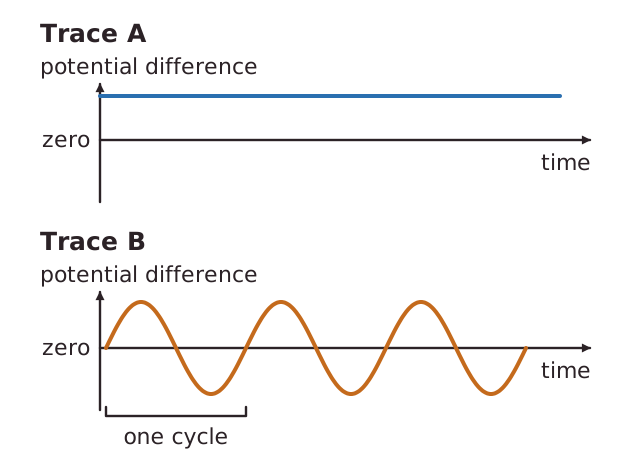
A cell or battery gives a direct potential difference, written d.c. The terminals never swap, so the potential difference stays constant and the current in a circuit always flows in one direction.
An alternating potential difference, written a.c., keeps changing. It rises to a maximum in one direction, falls to zero, then reverses to a maximum in the opposite direction before returning to zero. When the potential difference has reversed, the trace goes below zero. Because the potential difference reverses, the current in a circuit keeps reversing too.
In the practical, a data logger records potential difference against time. Connected across a battery, it draws a flat horizontal line at a constant value. Connected across a low-voltage a.c. supply, it draws a repeating wave that goes above and below zero. The number of waves each second is the frequency of the supply.