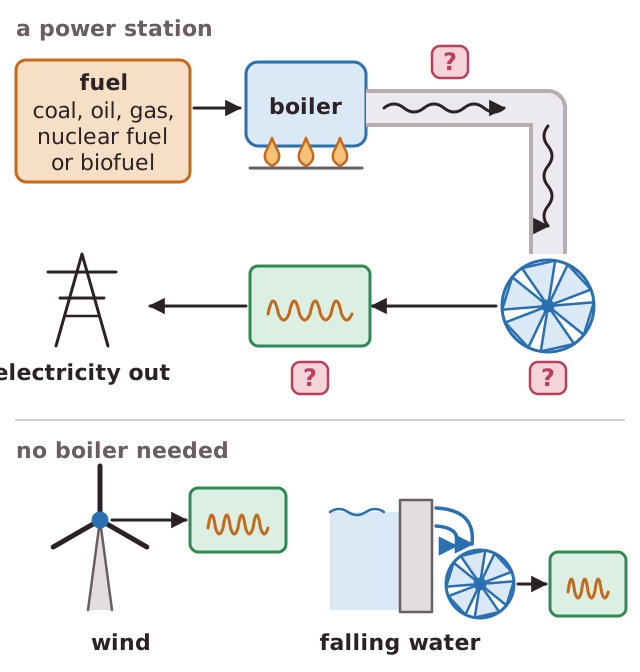
The main energy sources we use on Earth are fossil fuels (coal, oil and natural gas), nuclear fuel, biofuel, wind, hydroelectricity, tides and the Sun. Fossil fuels and nuclear fuel are non-renewable: there is a limited supply, so they will run out. A renewable source is replaced as fast as we use it, so it will not run out. Biofuel, wind, hydroelectricity, tides and the Sun are all renewable.
The sources are used in different ways. In a coal, oil or gas power station the fuel is burned to heat water and make steam. In a nuclear power station the heat comes from nuclear fuel, and it also makes steam. In both cases the steam turns a turbine, and the turbine turns a generator. Biofuel is made from plant material or animal waste. It can be burned in power stations in the same way, or used as a fuel for vehicles. Burning biofuel releases carbon dioxide, but new crops can be grown to replace what was used.
Wind and falling water turn a turbine directly, with no steam needed. In hydroelectricity, water falls from a high reservoir through the turbines. Tidal power uses the rising and falling tide to turn turbines. Solar cells use light from the Sun to make electricity directly.
Burning fossil fuels releases carbon dioxide, which adds to global warming. Wind and solar power release none while they run, but they depend on the weather, so their output is unreliable.