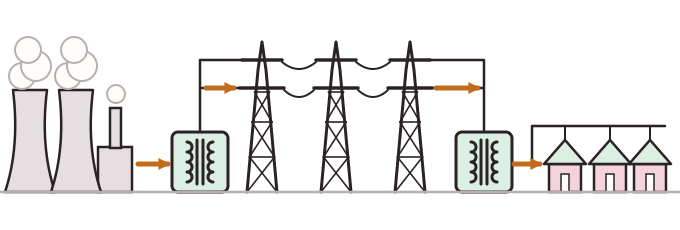
The national grid is a network of cables and transformers that connects power stations to homes, schools, shops and factories all over the country. Electrical power is transferred from the power stations at a high voltage. The cables carrying it across the country, often hung from pylons, are at up to 400 000 V.
This voltage is far too high to use safely in a home. In each locality the voltage is reduced in stages by step-down transformers. For domestic use the supply is about 230 V.
So the pattern is simple: high voltage for the long journey from the power station, and lower voltage in each locality where the electricity is used. A transformer is the device that changes the voltage at each stage. The voltage is raised for the long journey and reduced again before it reaches homes.