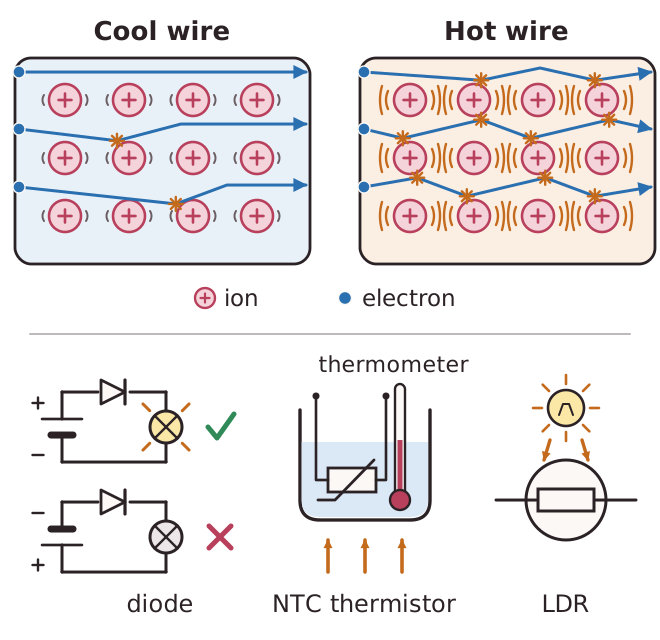
In a metal, current is a flow of electrons through a lattice of positive ions. The electrons collide with the ions, which is what causes resistance. At constant temperature a fixed resistor has constant resistance, so the current is directly proportional to the p.d. across it.
In a filament lamp the current heats the thin wire filament. As the filament gets hotter its ions vibrate more, so electrons collide with them more often and the resistance increases. This means the current rises by less and less as the p.d. is increased.
Other components change their resistance in other ways. A diode has a very low resistance in the forward direction but a very high resistance in the reverse direction, so current flows in one direction only. The resistance of an NTC thermistor decreases as its temperature increases. The resistance of an LDR decreases as the light intensity on it increases.